Rising Damp Treatment: What Works on a Solid Wall
August 13, 2026
Electromagnetic Damp Treatment for Walls Explained
September 7, 2026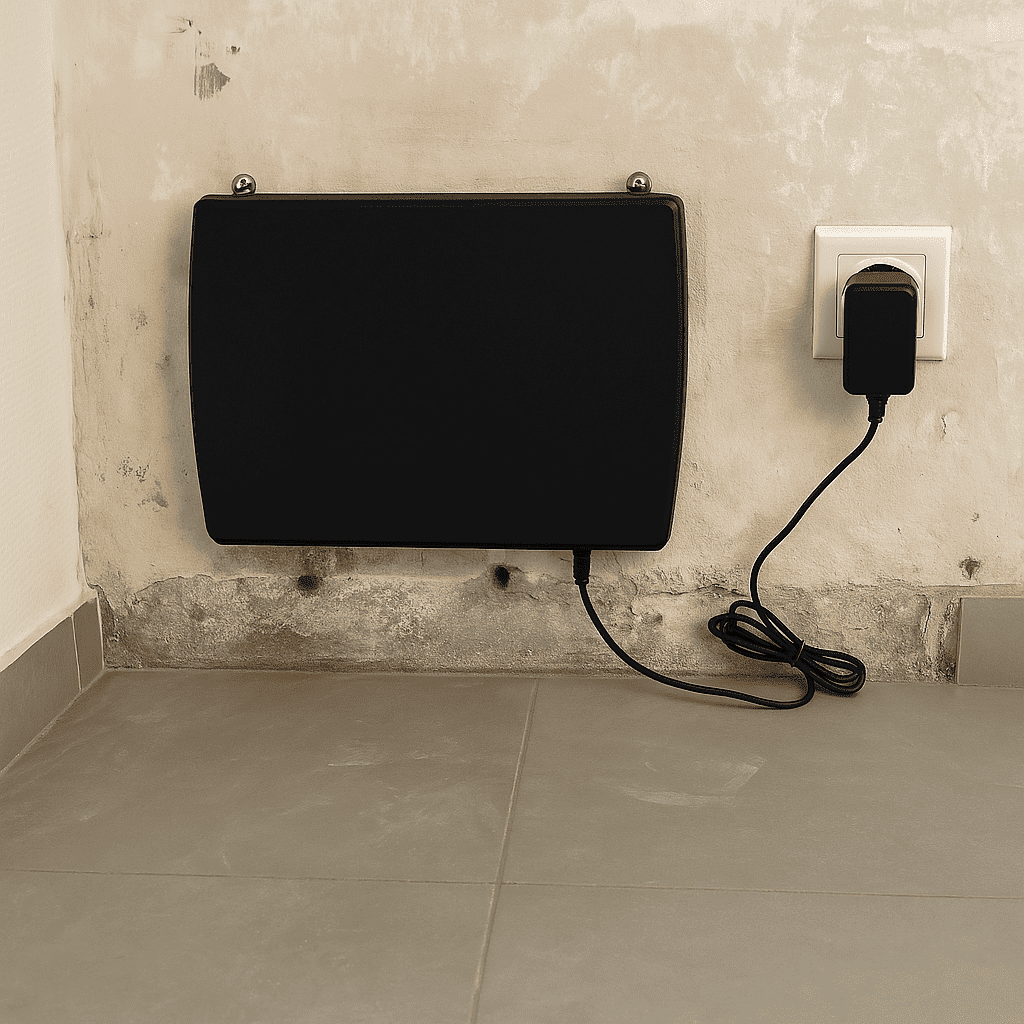
No product for damp walls does much good while the masonry still draws water out of the ground. So the order of work counts for more than the label on the tin. Find the cause, treat the cause, then choose a finish that lets the wall dry. Paint, render and water repellent all belong at the end.
Most people pick a product for damp walls the other way round. They paint in spring, the paint flakes by winter, and the wall holds more water than before.
Why a product for damp walls fails on a wall fed from below
Stone, brick and lime mortar are porous. Water from the ground climbs the microscopic channels inside them, and the finer those channels are, the higher it goes. It is the same physics as capillary action in a lump of sugar dipped in tea, and ATE: electromagnetic anti-damp device for damp walls and rising damp follows the journey from the footings upwards.
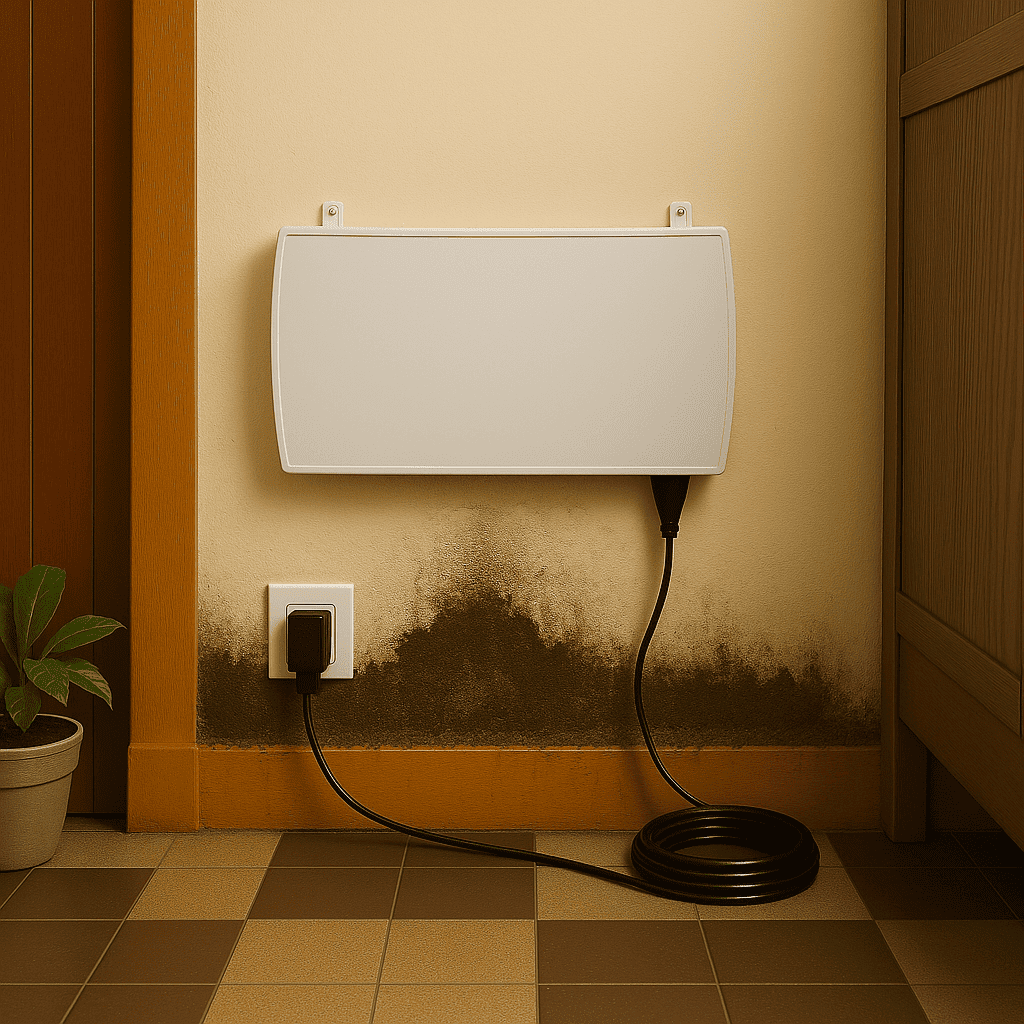
At the surface the water evaporates and leaves its mineral salts behind. They crystallise, sometimes as a white bloom, sometimes a few millimetres under the render. As the crystals grow they push the material apart, so any product for damp walls laid over that zone rests on ground that keeps shifting.
Salt also pulls moisture out of the air. That is why a wall carrying heavy salt efflorescence feels damp long after the rise has eased, as ATE or ATG: which Humidistop device to choose against damp walls explains.
What each kind of product for damp walls really does
Anti-damp paint is the product for damp walls people reach for first. It hides the stain and leaves the cause untouched, so on a wall fed from below it usually blisters within a season or two.
Renovating render earns its place better. It holds the salts in its own thickness and lets vapour through, so the wall keeps breathing while it dries. Still, it buys time rather than treating anything.
A water repellent belongs outside, on a wall that soaks up driving rain. Used indoors as a product for damp walls, it seals the surface and pushes the tide mark higher. Our guide ATG Geostop: the standalone unit that installs without an electrician sets out which finish suits which case.
A product for damp walls that works on the cause, not on the surface
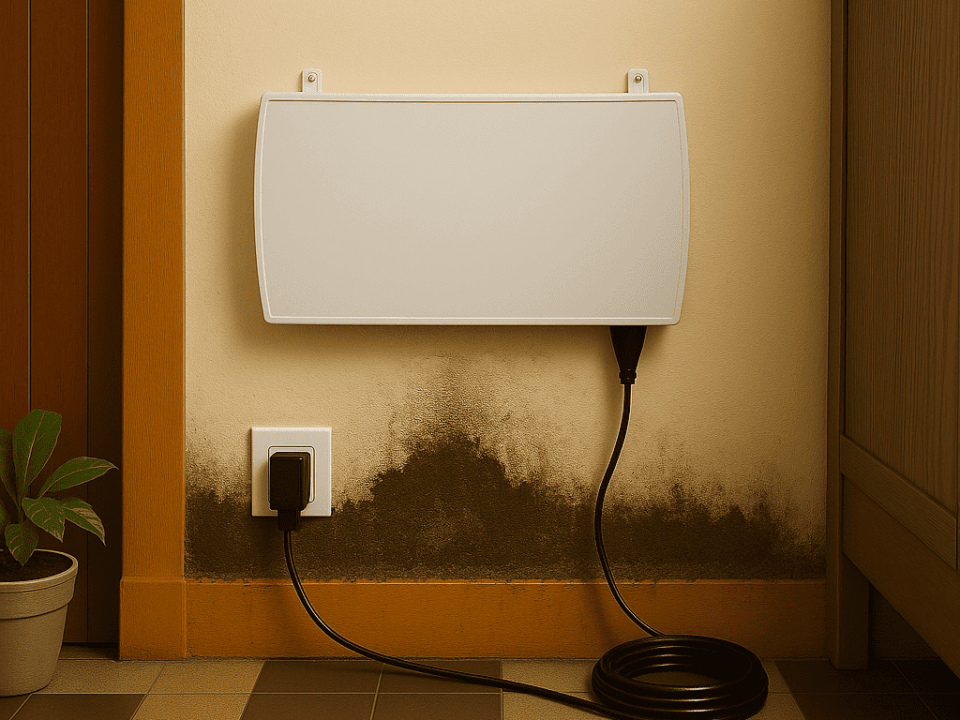
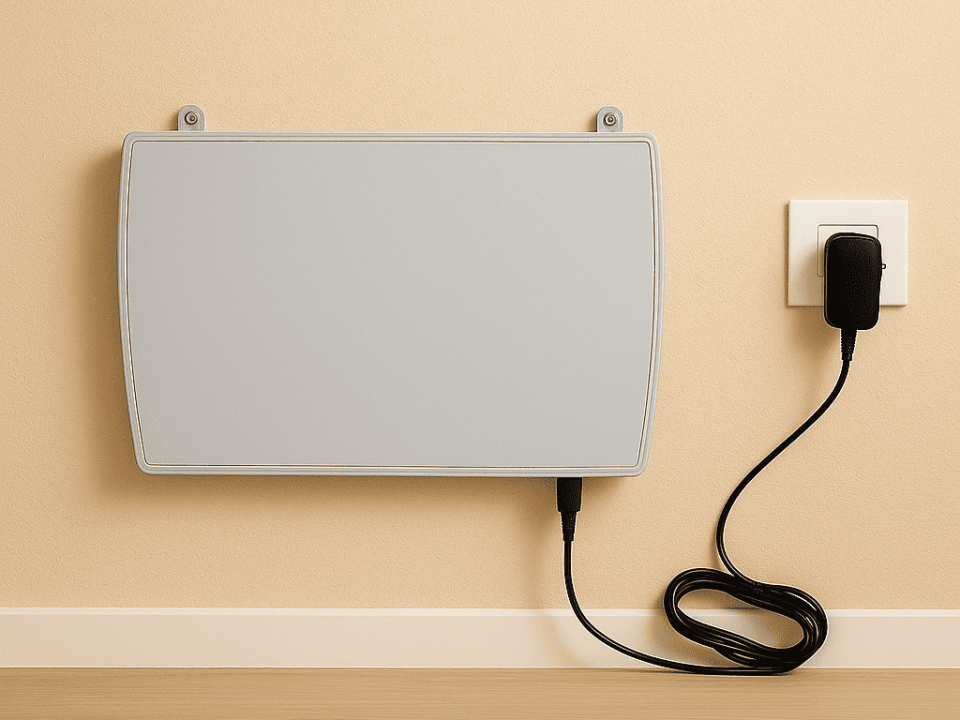
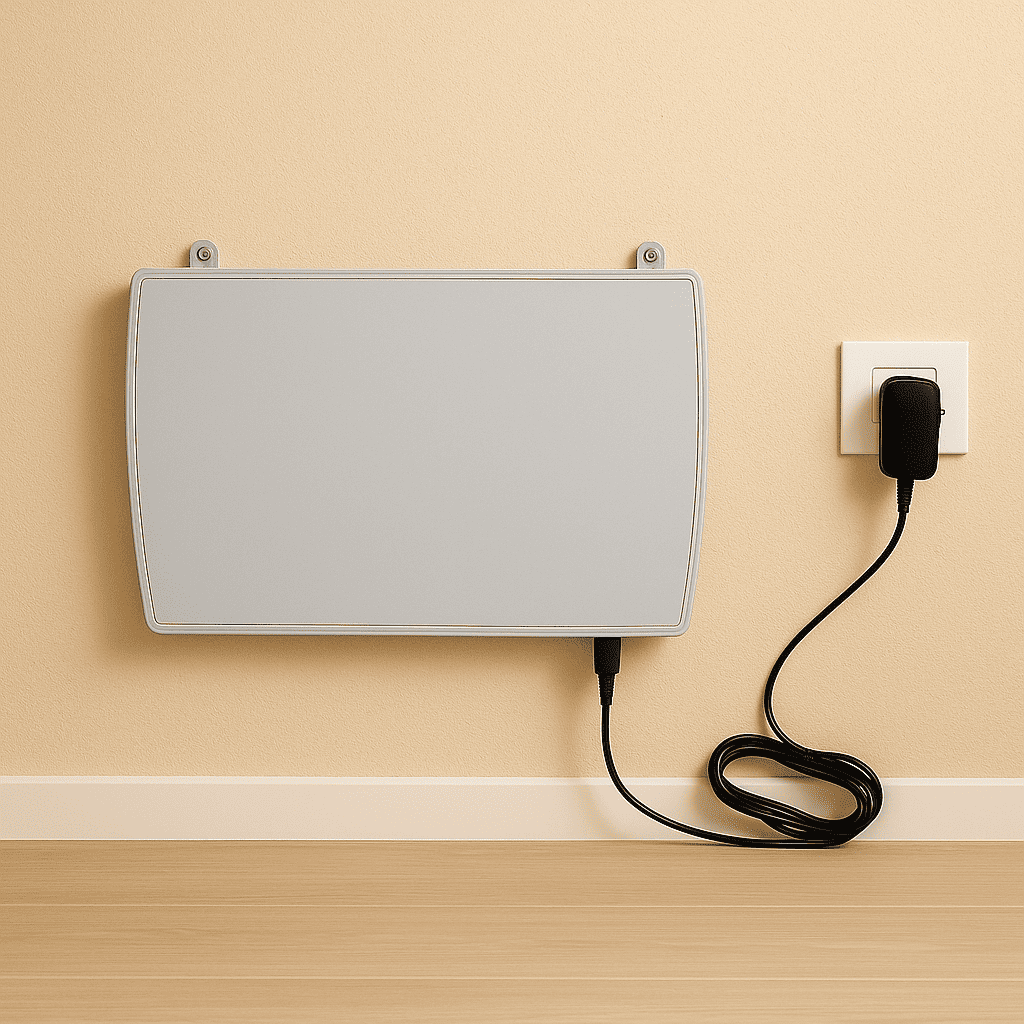
The ATE is an electromagnetic polarity inverter. It plugs into an ordinary socket and sends very low frequency electrical pulses through the masonry, without a break. Its design principle comes from electro-osmosis. The pulses act on the electrical charges where the water meets the wall of the pore. So they work against the climb and favour the return of the water towards the footings.
We describe that as a design principle, and we put it no higher. The unit takes nothing out of the wall and heats nothing. Drying happens by evaporation, which is why visible results come between 18 and 24 months.
The ATG does the same job as a geomagnetic polarity inverter, with no power supply at all. Both count as a product for damp walls that acts on the masonry rather than on its skin, and Damp Wall Treatment: Which Solution Should You Choose? puts the two ranges side by side.
Choosing the model that covers your walls
Each unit works over a radius, measured from the point where you fix it. So measure the walls you want to treat, then pick the model whose radius covers them from a central position.
| Model | Range | Price |
|---|---|---|
| ATE LC15 | 7.5 m radius, 15 m across | €1,290 |
| ATE LC30 | 15 m radius, 30 m across | €1,590 |
| ATE MAX | 30 m radius, 60 m across | €1,990 |
Every unit draws 0.75 W on a 12 V supply and measures 322 x 232 x 32 mm. Each one carries a 10-year manufacturer warranty. All three are made in France, and delivery costs nothing. The ATG follows the same design principle with no mains supply, which suits a wall with no socket within reach.
Fitting the unit yourself
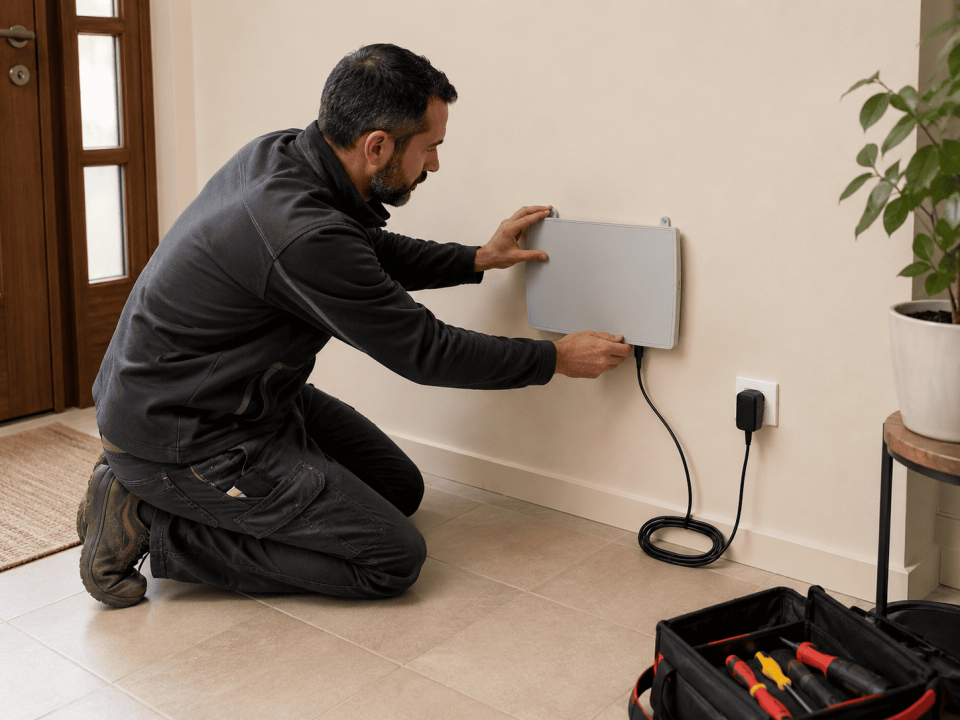
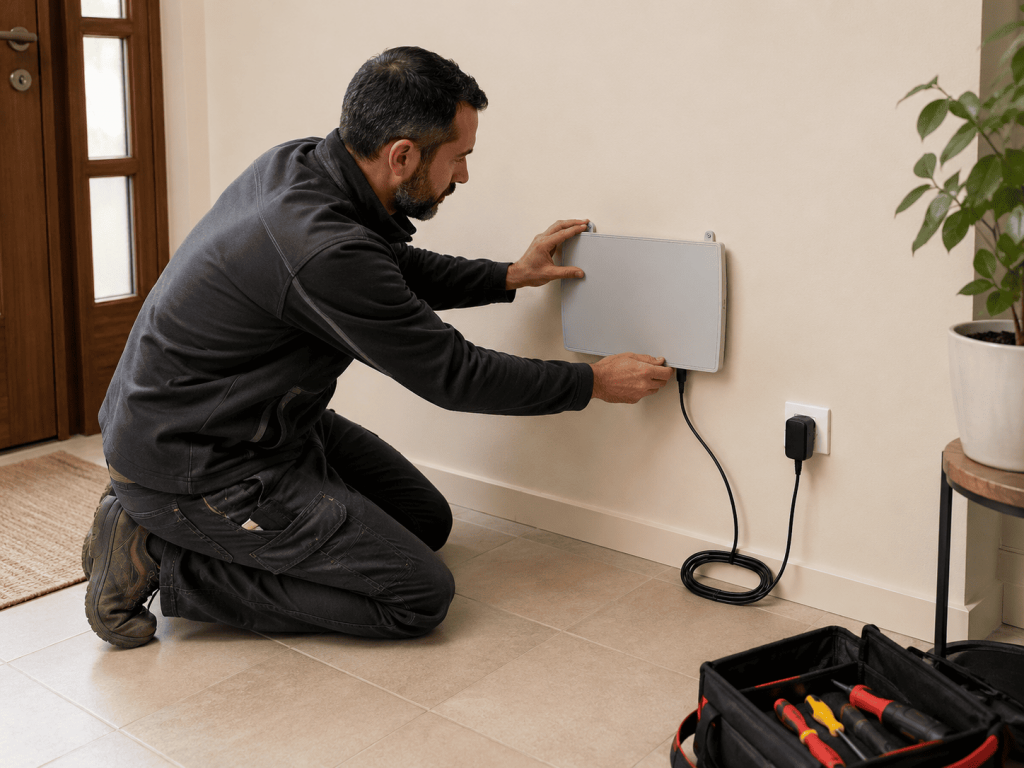
Fix it to a load-bearing wall or a partition wall, between 30 cm and 1 m above the floor. Aim for the centre of the area to treat. Two wall plugs and a socket, less than an hour, no tradesman.
Never fix it to plasterboard and never to insulation. The back of the unit has to touch the masonry. Keep 1.50 m between the unit and any other electrical equipment.
If the bottom of the wall carries a waterproof cement render, cut that render back over ten centimetres or so. Then the water reaches the air and evaporates, instead of sitting trapped behind a sealed skin.
The order of work that saves money
So begin with the cause. A leaking downpipe, a path raised against the outside wall or a blocked air brick leaves the same low tide mark as capillary damp. So no product for damp walls helps while any of them lasts. Our article Rising Damp: Signs, Causes and Solutions lists the signs that tell them apart.
Then strip whatever is loose. Flaking paint and damaged render come off, and the wall stays open to moving air for months.
Only after that does the finish go on. Choosing a product for damp walls is therefore the last decision of the job, never the first. If opening up the room does not appeal, Resin injection cost: is there an alternative? sets out the quieter route.
Frequently asked questions
Does anti-damp paint work on a damp wall?
Anti-damp paint covers the mark and leaves the water where it is. On a wall fed by rising damp it usually blisters within one or two seasons.
Which render suits a wall with rising damp?
A renovating lime render is the usual answer, because it holds salts in its thickness and lets vapour out. A waterproof cement render does the opposite and pushes the damp higher.
Can I use a water repellent indoors?
Water repellent products suit outside walls exposed to driving rain. Indoors they seal the surface, so they keep the water inside the masonry.
How long should a wall dry before painting?
Give the masonry several months of bare surface and moving air once the cause has been dealt with. Any product for damp walls applied to a wall that still holds water simply repeats the same failure.
Is there a product for damp walls that needs no tradesman?
The ATE and the ATG both fix to the masonry with two wall plugs, in under an hour. No drilling every ten centimetres, no trench outside.
Before you order
The unit treats rising damp and capillary damp, and nothing else. It does nothing for a leaking gutter, for driving rain, or for poor ventilation. Those three causes together remain more common than capillary damp, so rule them out first.
Rather than guess, send us two or three photos. One of the bottom of the wall, one of the room, one of the outside face. We read them and tell you which model fits, or tell you plainly that your problem lies elsewhere.
See the ATE and ATG models · free delivery, 10-year warranty, made in France