
Damp Party Wall: Source, Responsibility and Treatment
September 7, 2026
How to get more contracting jobs by treating damp walls
September 28, 2026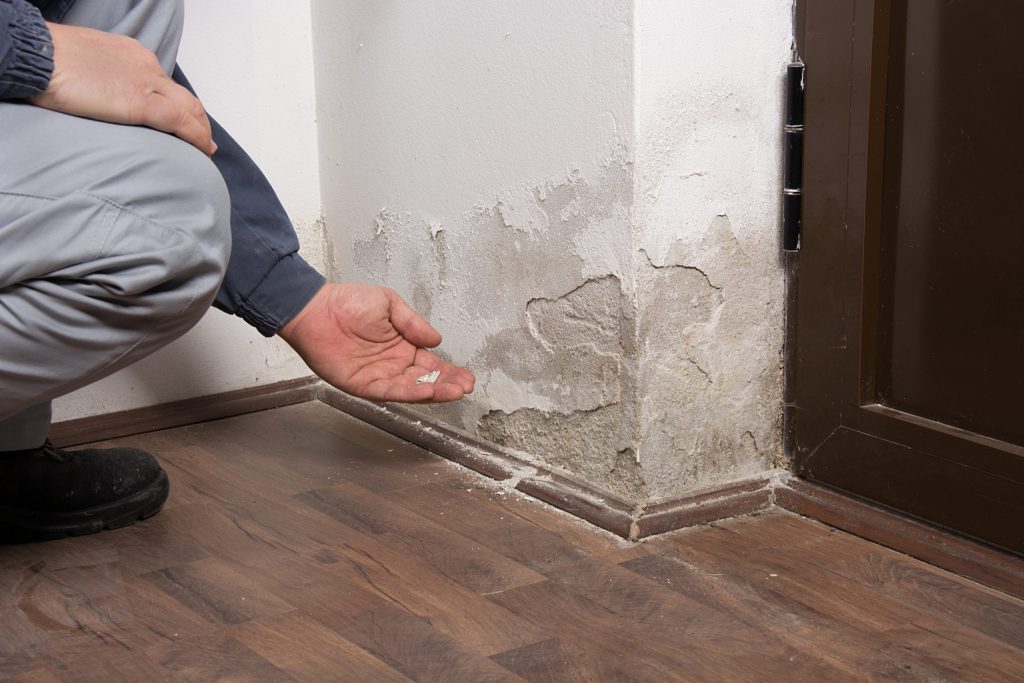
How to paint a damp wall without treating where the water comes from: it does not hold. The paint bubbles, saltpetre comes back through, and it is the painter the customer calls again. When the damp comes from the ground, the right method is to treat the rising damp, clear whatever is blocking evaporation at the base of the wall, then finish with a product that lets the masonry breathe. You can supply and fit this treatment yourself.
Why paint does not hold on a damp wall
In a wall affected by rising damp, water from the ground climbs through the masonry and evaporates at the surface. As it evaporates, it deposits mineral salts. These are what lift the paint, form bubbles, and leave the white marks known as saltpetre.
A sealed paint makes things worse. It keeps water from escaping at the bottom, so the water climbs higher to evaporate instead. The mark spreads, and the finish you just delivered breaks down within a season.
On site, the signs show up before you even open a tin:
- bubbling and flaking concentrated low down;
- a fairly even horizontal line between the sound and the damaged area;
- white deposits or efflorescence at the base of the wall;
- skirting boards swelling or coming away;
- plaster crumbling under the paint.
Identifying where the damp comes from before you quote
Not every kind of damp is treated the same way. Before you write a line on the quote, match what you see to one of three possible sources.
Rising damp
Seen low down on load-bearing walls: a fairly even horizontal line, saltpetre, skirting boards under strain, mostly in ground-floor rooms. It is treated inside the wall, with a polarity inverter and the removal of sealed coverings.
Condensation
Appears in cold corners, behind furniture and around windows, often with mould and mostly in winter. It is fixed through ventilation and heating.
Water penetration
Stays localised, gets worse after rain, and affects exposed elevations, areas below windows, or spots under the roofline. It is a weatherproofing issue: roof, façade, gutters, joinery.
Only the first of these calls for a wall-treatment device. Facing water penetration, flooding or surface mould, a polarity inverter has no effect at all. Telling the customer this at the first visit avoids a dispute later. For the borderline cases: condensation or damp, how to tell the difference.
How to paint a damp wall caused by rising damp: the work order
Step 1: treat the cause
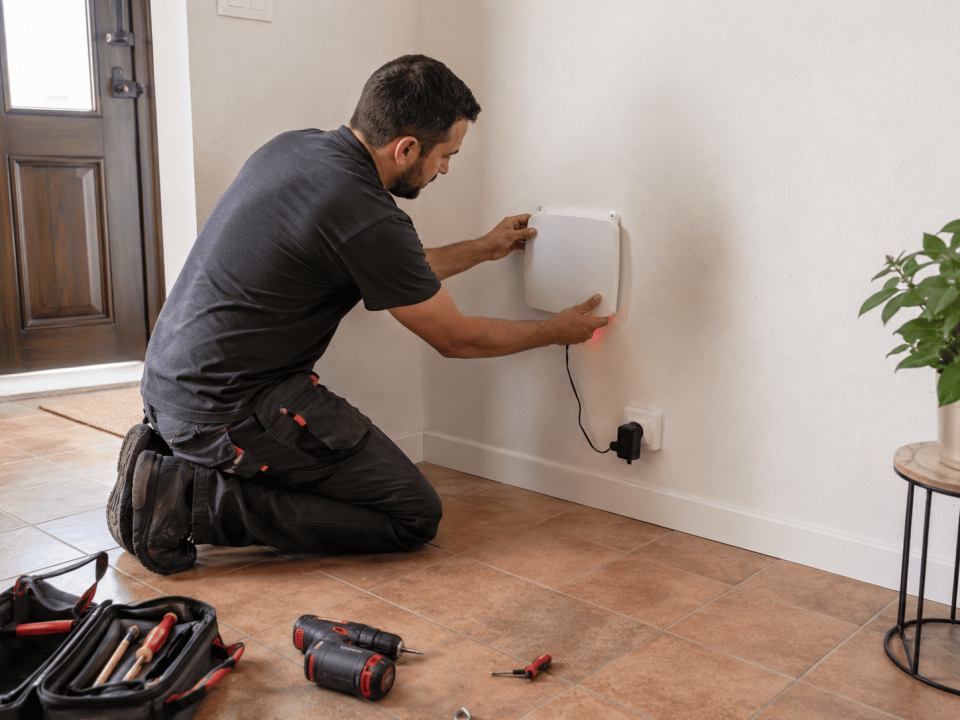
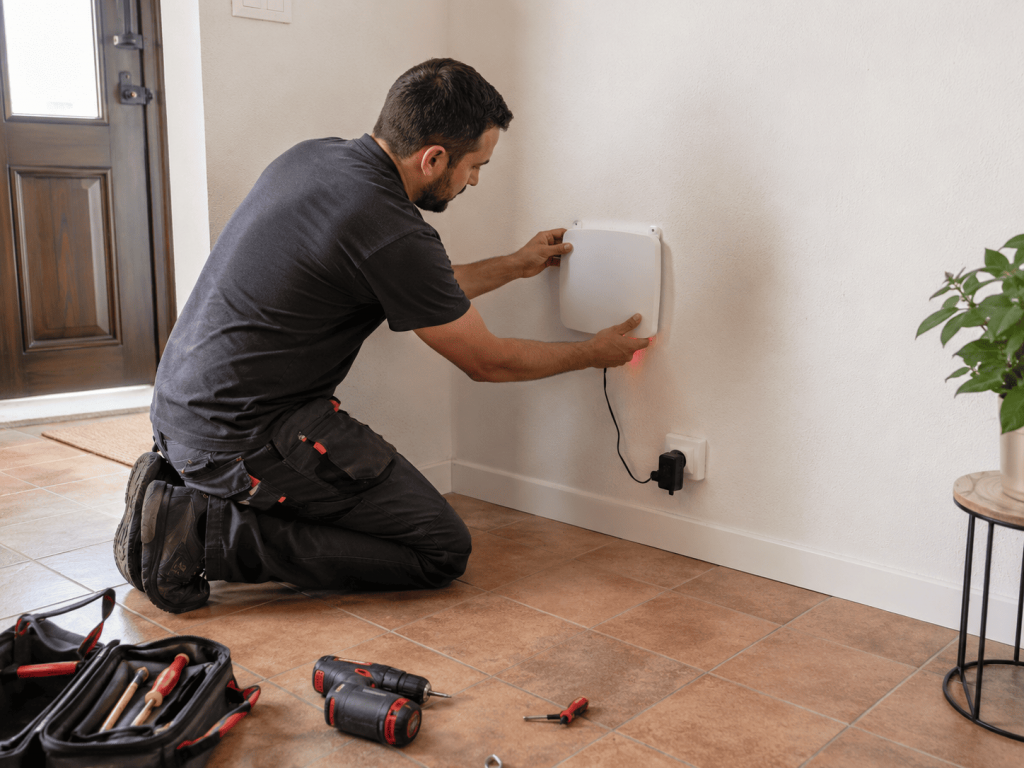
Fit a polarity inverter on a damp load-bearing wall, close to the floor and roughly at the midpoint of the affected run. The device acts on the water held in the masonry and gradually sends it back down towards the ground.
Step 2: clear the base of the wall
Remove whatever is blocking evaporation at the bottom: sealed paint, cement render, glued tiling, stud lining. This removal sets the pace of the drying.
Step 3: check the outside
A leaking gutter, a downpipe emptying against the façade, or ground that slopes water back towards the wall all feed the damp on top of the rising damp itself.
Step 4: let the wall breathe
Low down, wait several months before closing it back up. While the wall dries, the salts keep coming out: a wall that is improving can look whiter for a while.
Step 5: finish with a breathable product
On the lower section, choose a finish that lets water vapour through, such as a lime paint or a microporous paint, rather than a sealed film.
State the timeline in the quote itself. Following the installation guidelines, improvement is generally seen between 18 and 24 months, depending on the starting damp level and the wall thickness (how long it takes to dry out a damp wall). For tracking progress, a dated pencil mark at the top edge of the stain is enough for the customer.
This timeline works in your favour: the final finish on the lower wall becomes a second visit that you can schedule from the very first quote.
Why you should offer the treatment yourself
The painter is often the first tradesperson to see the problem up close. The customer already trusts you, you are on site, and it is your finish that gets judged if the wall keeps deteriorating.
- One more line on the quote: supply and fitting of the device, on top of prep and paint.
- No subcontracting: you keep control of the job and the customer relationship.
- Fewer callbacks: treating the cause protects your own work.
- Work that flows on: stripping coverings, redoing render, finishing the lower wall.
You do not need to be a damp specialist: fitting is straightforward, and an installation guide comes with every device.
What fitting a polarity inverter requires
Fitting an ATE device takes a few minutes, with no drilling and no chasing into the wall. Four conditions decide the result:
- a load-bearing wall, never a stud partition;
- a low fixing point, facing the dampest part of the wall, never in a corner;
- the device fitted flush against the masonry: stud lining or plasterboard between the two is enough to skew the result;
- a grounded socket, permanently powered and not controlled by a switch.
The model is chosen on the distance to cover, measured from the fitting point to the furthest affected wall:
- ATE LC15: 15 metres of coverage;
- ATE LC30 and its new version ATE Pulse: 30 metres of coverage, the most common choice for single-family homes;
- ATE MAX: 60 metres of coverage, for large volumes such as apartment blocks, older buildings or commercial premises.
Without a grounded socket, the ATG range works with no electricity at all, but the ATE stays the priority as soon as a power supply is possible. If a socket needs to be added, that is an electrician’s job. The most common fitting mistakes are covered in the site guide for fitting a polarity inverter.
Sourcing direct from Help Humidité Pro
Help Humidité Pro, a Humidistop subsidiary, is the shop reserved for building professionals. ATE and ATG devices are sold at trade price, direct from the manufacturer.
- Trade account in two minutes: company name, registration number and contact details. Instant validation, no file to put together.
- No minimum order: single-unit purchases available, with quantity discounts.
- Free delivery within 7 working days, payment by bank transfer or PayPal.
- Installation guides and explanatory sheets to attach to your customer file.
- 10-year manufacturer’s warranty. Devices made in Castres, France, with EMC standards validated by the Nexio and Emitech laboratories.
- No franchise, no commitment, no territorial exclusivity: you order according to your own jobs.
Frequently asked questions
Can you paint a damp wall with an anti-damp paint?
On rising damp, a paint that forms a sealed film hides the symptom without treating the cause. Unable to evaporate at the bottom, the water climbs higher up the wall instead. A finish only belongs there once the source has been treated, and it must stay permeable to water vapour.
How long should you wait before repainting the lower wall?
At least several months for the lower section, left bare or covered with a breathable finish. Drying is generally seen between 18 and 24 months after the device is fitted.
Does a polarity inverter treat condensation and mould?
No. It acts on the water the masonry draws up from the ground. Condensation is fixed through ventilation, and water penetration through weatherproofing.
Do you need to be an electrician to fit an ATE?
No. The device plugs into an existing grounded socket, with no wiring work. Only adding a new socket calls for an electrician.
How do I order as a painter?
Create your trade account on the Help Humidité Pro shop with your company registration number. Trade prices show up straight away, and you can order a single device.
In summary
How to paint a damp wall only makes sense once the source of the water has been identified and treated. On rising damp: fit a polarity inverter, strip sealed coverings low down, finish with a breathable product, and state the 18-to-24-month timeline upfront. By supplying the treatment yourself, you protect your own finish and add a service to the quote. To go further: how to get more contracting jobs by treating damp walls.