
Home » Effectively eliminate rising capillaries and saltpeter
Rising damp - Causes and signs on walls
Rising damp (often referred to as capillary rise) is water from the ground that gradually rises up through walls via porous materials (stone, brick, concrete block). It usually appears at the base of walls, both indoors and outdoors, and spreads “from the bottom up”.
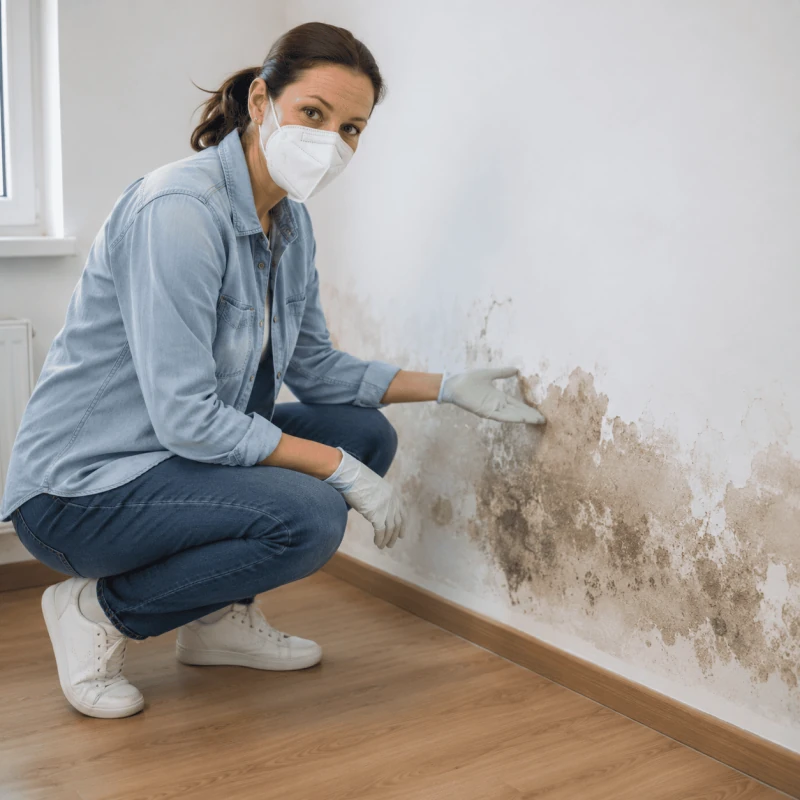
The most common signs are continuous tide marks near the skirting boards, crumbling plaster, blistering paint, coverings that peel away, and whitish deposits (salts/minerals) visible on the surface. The damp is often more pronounced on the ground floor and can make the wall look cold, uneven or “laden” with water. The marks are often fairly regular and extend over a limited height, developing gradually.
This page helps you identify the typical signs of rising damp and avoid confusion: water infiltration more often creates a localised stain or a streak, whereas condensation tends to form on the surface in cold areas (corners, windows, behind furniture). The aim is to understand what this type of damp looks like and why it appears, so that the situation can be classified correctly.
Rising damp
Find out how rising damp can seriously affect your home.
It can lead to damp problems, mould infestations and even structural deterioration, which makes early action essential.
This comprehensive guide will help you:
Recognise the first signs,
Understand the underlying causes,
Choose effective solutions to stop damp at the source,
Preserve the value of your property through prompt preventive action.
With expert advice, you can restore your home’s health and ensure a healthy, dry living environment for your family.
Understanding rising damp
Rising damp is the movement of water through the pores of building materials. This phenomenon depends in particular on the porosity of the masonry and its contact with damp ground.
It can show up as stains at the base of walls, salt deposits and deteriorating plaster. However, these signs alone are not enough for a diagnosis: water infiltration or condensation can leave similar marks.
Before choosing a treatment, have the source of the damp and the condition of the walls checked. We then help you choose a device suited to rising damp and to the coverage required.
Protect your home from rising damp
We recommend having your walls checked as soon as persistent marks appear. A diagnosis helps to identify rising damp and to avoid confusing it with water infiltration or condensation.
Treat the cause of the damp before redoing paintwork or plaster. Then monitor how the wall develops with appropriate measurements and follow the installation recommendations for the device you have chosen.
Identifying the cause of the damp is the first step in protecting your home. If rising damp is confirmed, we help you compare our ATE and ATG devices according to how they work and their coverage diameter.
Discover our ATE electromagnetic devices and our ATG geomagnetic devices that need no electricity, or contact our team to choose a suitable model.
