
Home » Solutions for floods and water damage
Water infiltration - Recognising the causes

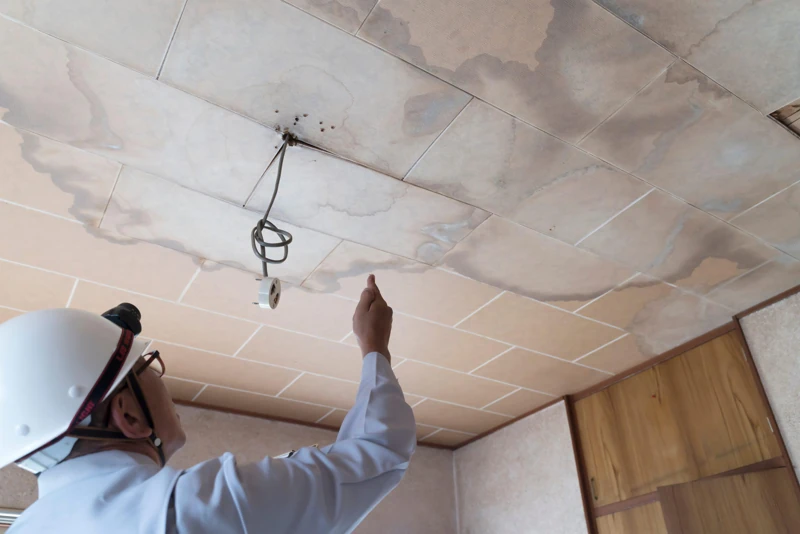
Water infiltration means water entering through a specific point in the building (roof, façade, joints, cracks, window and door frames, terrace, basement). It is most often recognised by localised stains, irregular tide marks, vertical streaks, or a damp area concentrated around an identifiable spot (near a window, on the ceiling, in a corner of the façade). The marks may appear after a spell of rain, run-off, or a failure in waterproofing.
Flooding, on the other hand, brings direct and substantial contact with water (water rising in a basement, water on the floor, rapid saturation of materials). The signs are usually more obvious: surfaces soaked over a large area, rapid deterioration of coverings, water-level marks, strong odours and widespread damp.
This page helps you recognise the visible signs of water infiltration or flooding, and avoid confusing them with rising damp, which mainly shows at the bottom of walls and develops gradually. The aim is informative: to understand what these problems look like, spot the typical marks and correctly classify the type of damp observed.
Water infiltration
Construction defects can lead to water infiltration in a home, affecting both the roof structure and the window and door frames.
To avoid this type of problem, it is essential to check and maintain the watertightness of the roof and exterior walls regularly.
Without suitable preventive measures, a house exposed to water infiltration can develop a high level of humidity, leading to stains and other damage throughout the building.
Flooding
Floods are among the most feared natural disasters, often causing considerable damage and devastating consequences for homes and communities.
They occur when exceptionally large volumes of water exceed the drainage capacity of the ground or the effectiveness of water management systems.
Floods have many causes: heavy rain, flash floods, dam failures and storm surges.
Accidental causes
Accidental flooding can occur in homes following dam failures, breakdowns in urban drainage systems or leaking pipes.
These sudden, large-scale events can cause serious damage to structures and property.
Likewise, accidental water infiltration — often due to plumbing leaks or construction defects — can cause significant damage inside buildings.
To prevent such incidents, it is essential to inspect infrastructure regularly and put appropriate preventive measures in place.
In an emergency, a fast and effective response is crucial to limit the damage and keep occupants safe.
Flooding and water infiltration pose a serious threat to homes and can cause major structural damage and material losses.
Whether they result from accidental events — such as a dam failure or a leaking pipe — or from natural phenomena such as heavy rain, these situations call for continuous monitoring and proactive prevention.
Effective water management, regular maintenance of infrastructure and the use of resilient building practices are essential to reduce the risks associated with flooding and water infiltration.
In addition, a rapid and coordinated emergency response is crucial to limit the damage and keep occupants safe.
By acting preventively and working together, we can better protect our homes against the harmful effects of these events.
