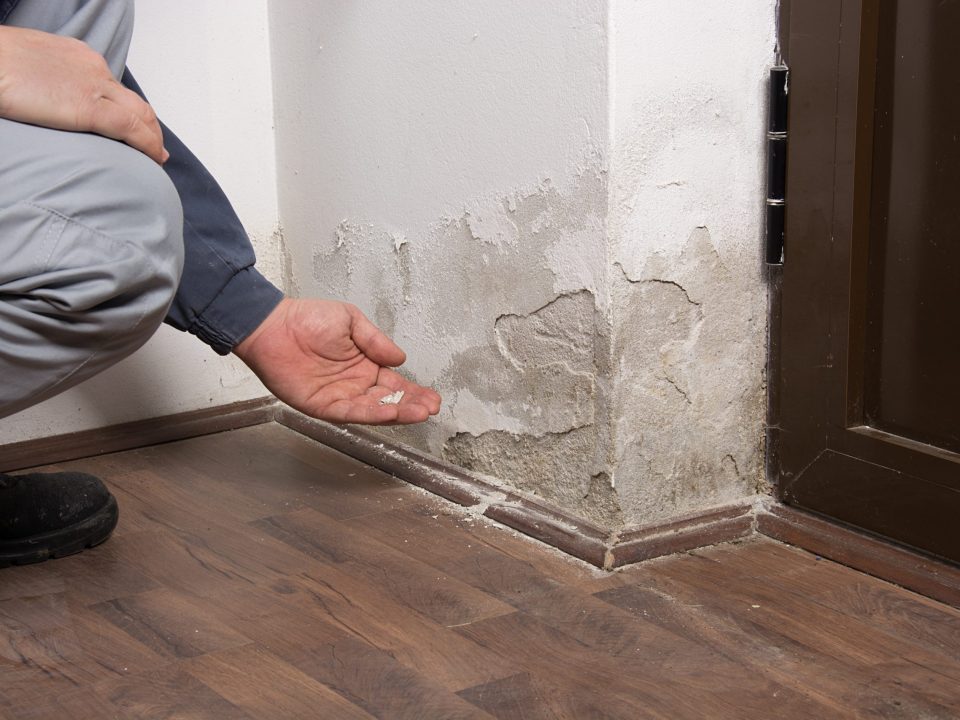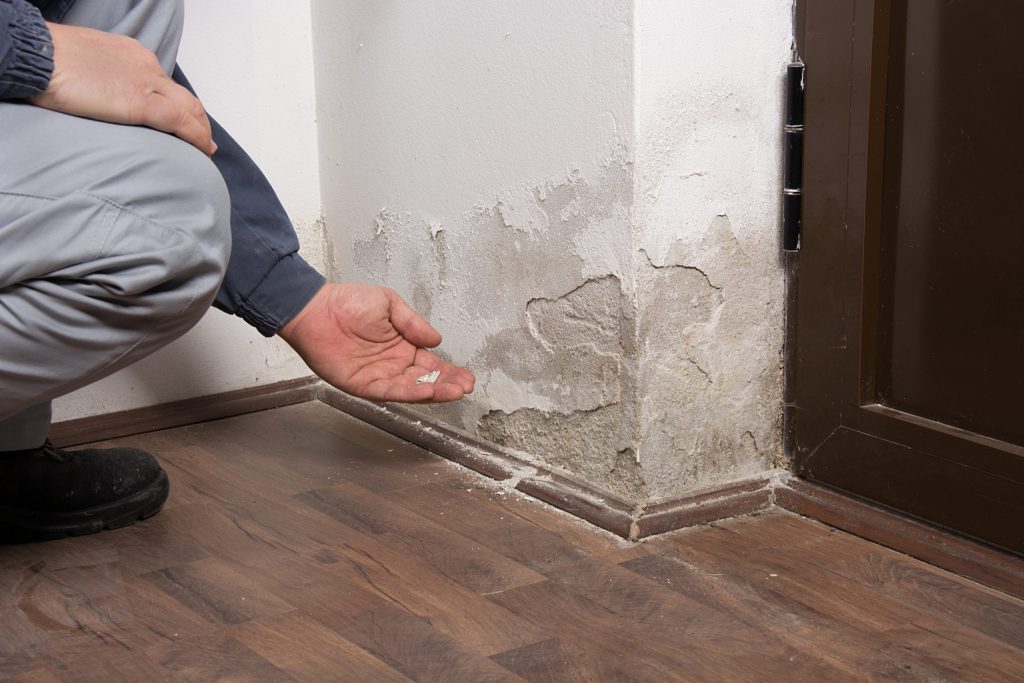
How to paint a damp wall: what the painter must treat first
September 28, 2026How to get more contracting jobs by treating damp walls
How to get more contracting jobs rarely comes down to a single method. The steadiest work comes from customers you already have and needs you already know how to treat when they come up. Damp walls fall into that category: homeowners see it, look for a solution, and one treatment leads to several other jobs. Here is how to turn it into a source of work, whatever your trade.
The jobs you are missing without knowing it
During a painting, plastering or tiling visit, the question keeps coming up: “And can you do anything about the damp low down on that wall?” If the answer is no, the customer looks elsewhere, and the job that follows goes with them.
These requests mainly come from four types of customer:
- owners of older stone or brick houses;
- buyers who discover damp marks when they start renovating;
- occupants of ground-floor homes;
- customers mid-renovation who want the problem treated before the finishes go back on.
One treatment, several lines on the quote
A well-run rising damp treatment is not just about fitting a device. It opens up several jobs, whether you carry them out yourself or alongside other trades.
Diagnosis and fitting
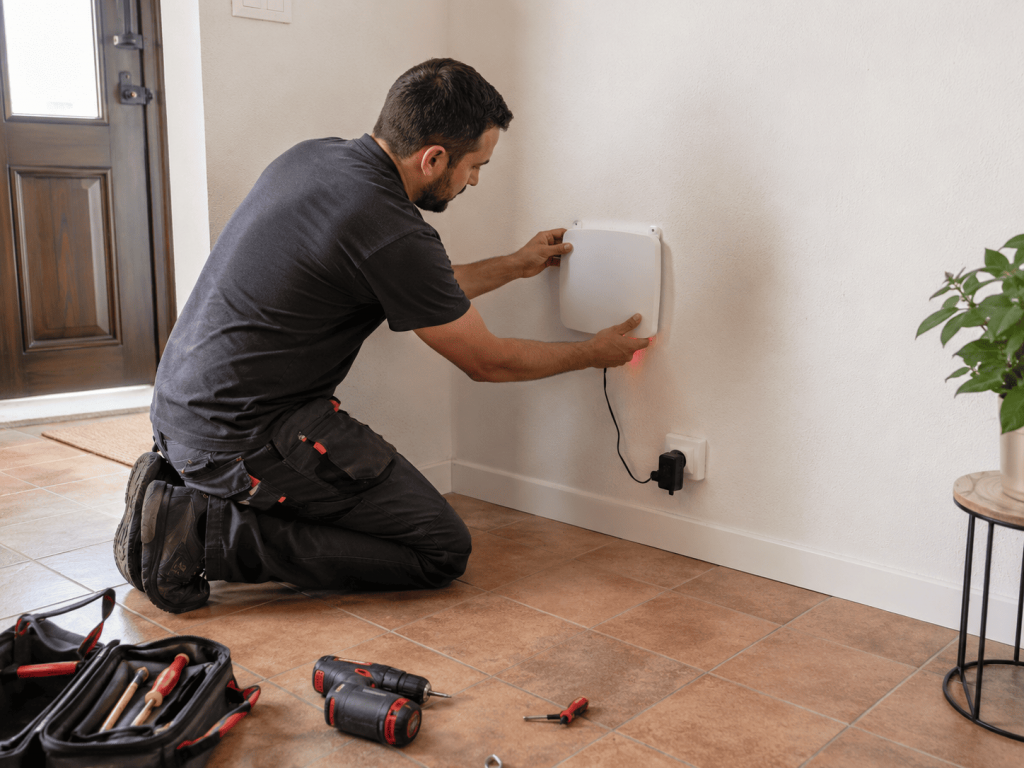
Spotting where the damp comes from, measuring the distance to cover, choosing the model and fitting the polarity inverter. This is the job of the tradesperson running the site, guide in hand.
Clearing the base of the wall
Removing stud lining, cement render, sealed paint or glued tiling that keeps the wall from drying. Work for the plasterer, the mason, the painter or the tiler.
Outside water sources
Fixing a gutter, a downpipe, a drain, or ground sloping water back towards the façade. Work for the roofer or the mason.
Finishes after drying
Lime render, breathable paint, fitting skirting boards: the mason, the painter and the joiner all step in once the wall is dry.
Electrical supply, where needed
When no grounded socket is available near the fitting point, adding one falls to the electrician.
Every step is a line on the quote. And since a wall generally takes a year and a half to two years to dry, the final finish comes later: a return visit already booked in with the customer. The painter’s angle is covered here: how to paint a damp wall, what the painter must treat first.
How to get more contracting jobs: let people know you treat damp
To get more contracting jobs from this service, people first need to know you offer it. A few simple steps are enough to get the request coming to you:
- add “rising damp treatment” to the list of services on your quotes, invoices and website;
- update your Google Business listing with this service;
- ask the question at every visit: spotting a mark low down on a wall takes a minute;
- mention it to the tradespeople you work with, who see the same walls you do;
- back up your quotes with the explanatory sheets and ready-made text supplied by Help Humidité Pro.
A service that adds to your trade
Treatment by polarity inversion needs no special tools, no heavy work, and no change of trade:
- fitted in a few minutes, with no drilling and no chasing;
- the ATE plugs into an existing grounded socket, the ATG needs no power at all;
- runs continuously with no maintenance, for around 15 € of electricity a year;
- a 10-year manufacturer’s warranty, which you pass on to your customer.
You stay the expert on site: diagnosis, fitting and the customer relationship belong to you, and that is where your added value sits.
Be clear about the limits from the first visit: the device is for rising damp, and water penetration, flooding or surface mould call for a different treatment. Stating the scope upfront protects your reputation.
Presenting the service on your quote
A customer signs a quote more easily when they understand it. Break the work into lines rather than a single lump sum:
- supply of the device, with its exact reference and coverage;
- fitting, including choosing the fixing point and checking the socket;
- removal of coverings keeping the base of the wall from drying;
- outside repairs, where needed;
- the finish on the lower wall, scheduled once the wall is dry.
Add what the customer needs to remember: the timeline before results show, the fact the device stays plugged in permanently, the 10-year manufacturer’s warranty, and what the treatment does not cover. The model’s explanatory sheet, attached to the quote, makes all of this easy to follow.
Your margin builds in two places: the gap between the trade price and your resale price on the device, and the labour on the work that comes with it.
Starting with a first device
There is no need to build up stock. On Help Humidité Pro, Humidistop’s trade shop, you open an account in two minutes with your company name and registration number. Validation is instant.
- trade prices visible as soon as you sign up, with quantity discounts;
- a single device is enough to order, with no minimum;
- delivered free within 7 working days, paid by bank transfer or PayPal;
- an installation guide supplied so you can get to grips with the device from the first job;
- no franchise, no commitment, no territorial exclusivity.
Choose the model based on the distance to cover: ATE LC15 for 15 metres of coverage, ATE LC30 or ATE Pulse for 30 metres, ATE MAX for 60 metres. When no grounded socket is available, the ATG range steps in instead.
Frequently asked questions
Do you need to be a damp specialist to offer this treatment?
No. Fitting follows a precise guide: load-bearing wall, low fixing point, direct contact with the masonry, grounded socket. Diagnosing the source stays essential, since only rising damp is covered. The mistakes to avoid are in the site guide.
Which businesses can order from Help Humidité Pro?
Any registered business whose activity relates to the home sector or specialist distribution: tradesperson, renovation company or reseller.
How long before the customer sees a result?
Generally 18 to 24 months for a visible result, provided the fitting follows the guide. Thick walls or ones heavily loaded with water take the longest to dry. State this timeline before the customer signs.
Can I order a single device for a first job?
Yes. There is no minimum order on the Help Humidité Pro shop.
In summary
How to get more contracting jobs starts with the requests your customers already bring you. Damp walls are one of them: a rising damp treatment opens up several jobs and a finishing visit booked in a few months later. With a trade account validated in two minutes and no minimum order, you can offer it from your very next visit.