Electromagnetic Damp Treatment for Walls Explained
September 7, 2026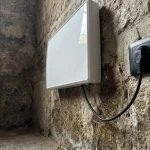
Resin injection cost: is there an alternative?
September 7, 2026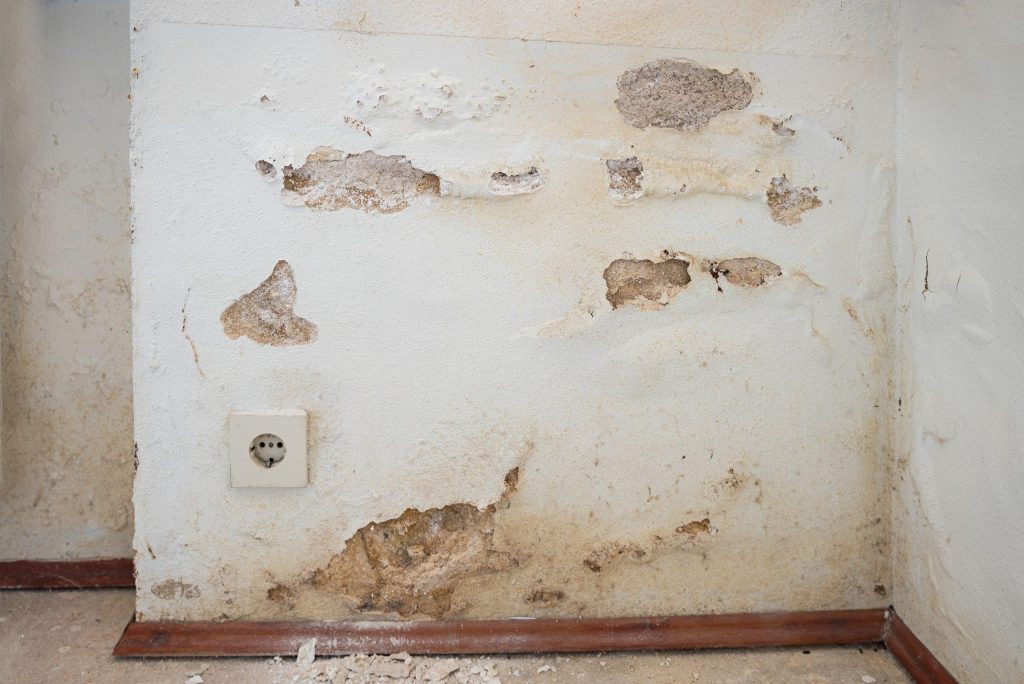
Damp skirting boards are rarely a skirting board problem. The timber or MDF absorbs water held in the base of the wall, then swells and breaks down. So here is what this symptom really tells you, how to read what lies behind, and in which order to act so you never do the same job twice.
Why damp skirting boards point at the wall, not the floor
The material absorbs and distorts
MDF, now very common, behaves like a sponge. It swells, then crumbles along the cut edge. Solid timber moves differently and pulls away from the wall. In both cases the water comes from the masonry or the floor, never from the room air.
Adhesive and paint let go
A bonded board drops off once the background stays wet. Moreover, paint blisters along the lower edge. Both signs usually appear before any visible swelling.
The base of the wall concentrates water
Water rising from the ground evaporates where it meets air. Yet the skirting covers exactly that zone. It therefore traps moisture against the wall and fails first.
What you will find behind
Lift half a metre of board in a discreet corner. This simple step tells you more than any meter.
Render that crumbles
If the render turns to powder between your fingers, with a white deposit, salts have already come through. They travel with ground water, which leaves them behind as it evaporates. As they crystallise, they break the render from within.
A darkened but firm background
A stained surface that stays solid points instead to condensation. It soils without destroying.
A background wet to the touch
Masonry that feels genuinely wet after a dry spell indicates a permanent water supply. Look then for a leak or for rising damp.
Damp skirting boards: telling the three causes apart
Rising damp
It forms a continuous band at floor level, at fairly even height, across several walls. Furthermore, it advances slowly with no link to rainfall. Boards then distort along their whole length rather than in patches. Our page on rising damp and saltpetre sets out each sign.
Condensation
It gathers behind furniture, in cold corners and on external walls. It worsens in winter. See our page on wall condensation.
A leak or penetrating damp
It produces one localised point. A single board swells, often near a water supply or an exposed wall. See our page on floods and water damage.
The one-week test that settles it
It needs no equipment at all.
First, lift the damaged board and leave the wall open. Then ventilate the room morning and evening for seven days.
If the background dries and lightens, condensation was the dominant cause. Work on ventilation in that case.
By contrast, if the low band stays wet and keeps crumbling, water comes from the ground. No amount of airing will stop it.
Photograph before and after, noting the date. You then hold a solid basis for deciding what to spend.
Damp skirting boards: the mistakes that bring the problem back
Fitting a new board straight away
This is the most common reflex, and the most expensive. The wall still holds water, so the new board will swell exactly like the old one.
Choosing PVC to forget about it
PVC does not swell, that much is true. However, it seals the zone and blocks evaporation. Water then climbs higher, and the damage simply moves up the wall.
Applying cement render low down
Same mechanism. Cement passes vapour poorly. It therefore holds water back and concentrates salts beneath the surface.
Running silicone along the floor
A sealed bead between board and tiles closes the last escape route. It makes matters worse rather than containing them.
Painting over the top
Impermeable paint on a wet background blisters within months. It hides the symptom without touching the cause.
The right order of work
With damp skirting boards, the sequence matters as much as the work itself.
Start by identifying the source, using the signs described above. Next, fix outside water sources: gutters, downpipes, gullies, ground slope, paving laid tight against the façade.
Then let the wall breathe. Remove boards, failed render and any sealed finish low down. That bare wall may stay open for several months, which is entirely normal.
Treat the cause if water rises from the ground. Finally, refit boards once the wall reaches a stable level, never during drying.
Treating water that rises from the ground
Several methods exist: resin injection, a physical damp proof course, perimeter drainage and polarity inversion. Yet only the last avoids drilling the masonry.
The principle rests on a physical property of water. Each molecule carries two opposite charges, and that imbalance drives it upward through the wall. A low-frequency signal disturbs the dynamic, so the flow reverses and travels back down.
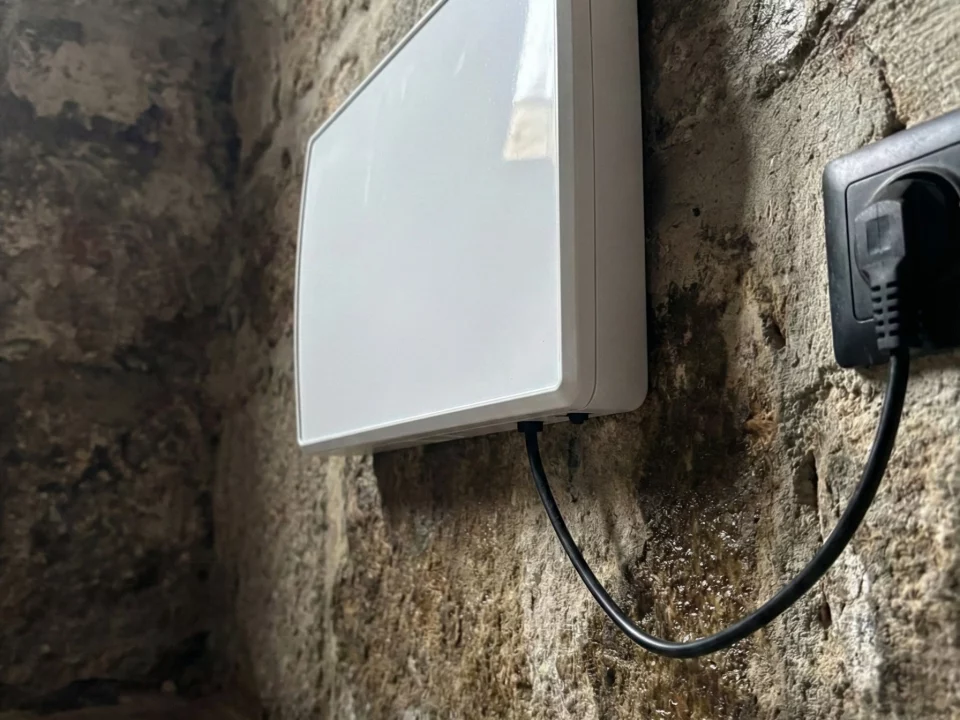
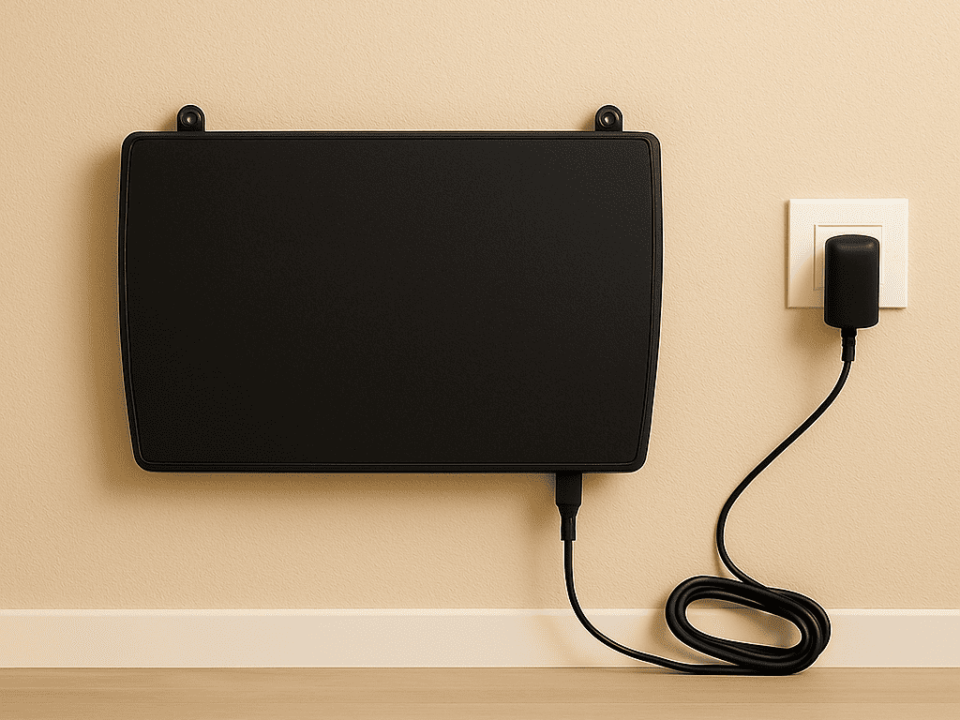
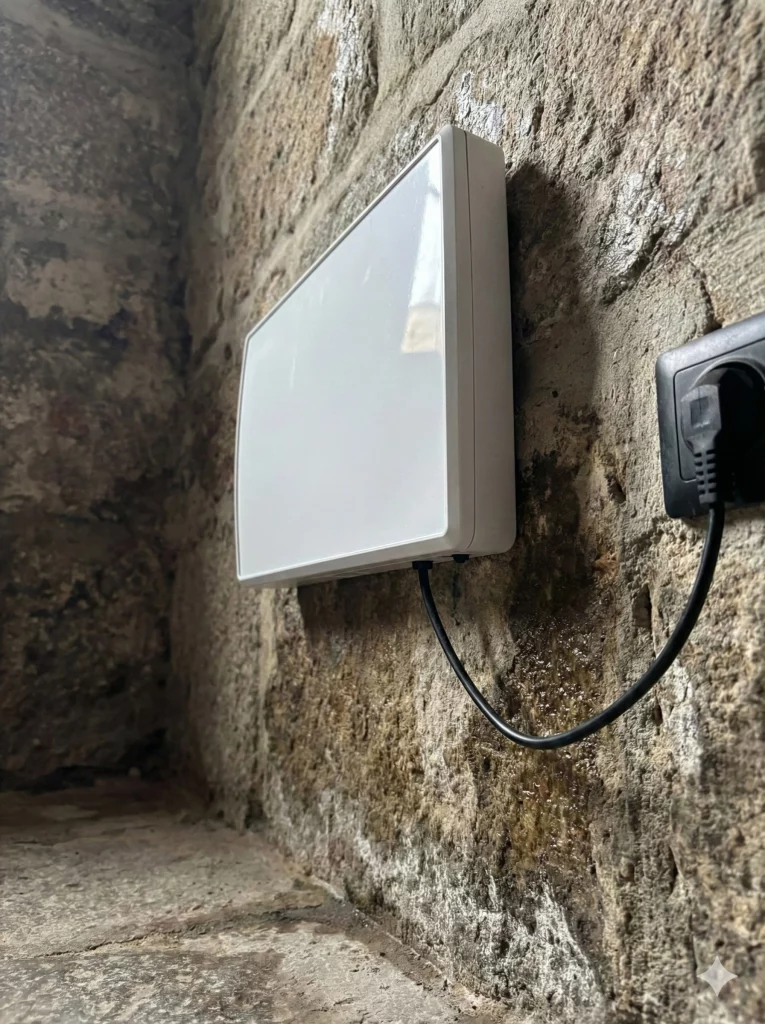
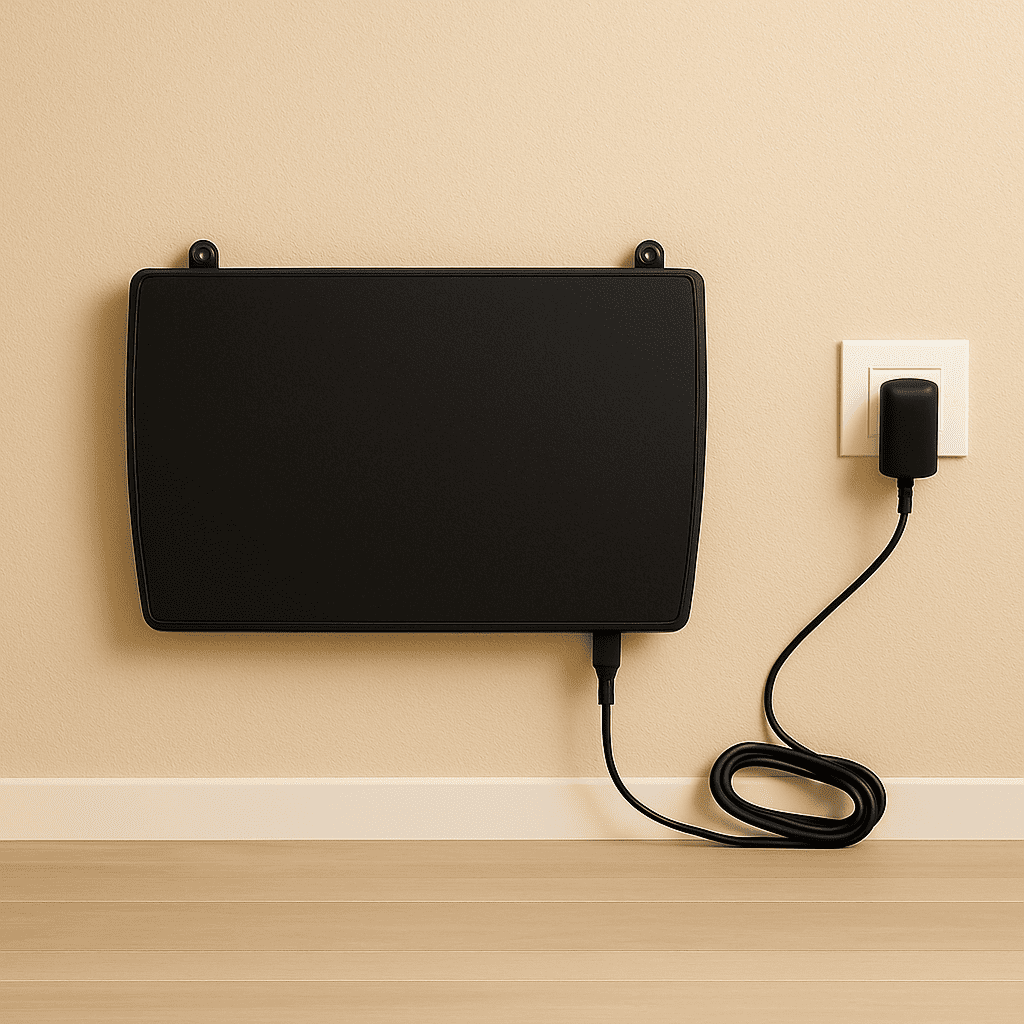
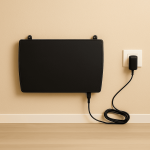
Two families exist. The ATE series plugs into an earthed socket and costs around €15 of electricity a year. The ATG series runs with no supply, although we reserve it for cases where fitting an ATE proves impossible.
As for placement, choose the worst affected stretch of a load-bearing wall and work at floor level. The background must be flat, and the unit must touch the masonry itself with no board in between. Coverage then decides the rest: the ATE LC15 spans 7.5 metres around it, the ATE LC30 reaches 15 metres, and the ATE Max covers 30 metres.
The limit of this technology deserves repeating. Its scope stops at water rising from the ground. A failed roof, a flood or surface mould all call for different answers.
Which boards to refit afterwards
Wait for the wall to settle first. A few choices then limit the risk.
Favour a material that tolerates residual moisture, such as treated solid timber or a tiled skirting. MDF remains the most fragile option.
Fix without bonding the whole back face. Point fixings leave a slight air gap behind the board.
Do not seal the joint with the floor. That small gap contributes to evaporation.
Finally, choose a vapour-permeable paint for the lower section rather than a sealed film.
How long before refitting
Once soaked, masonry behaves like a thick sponge: it gives back over many months what it absorbed.
In practice, those who follow our installation guidance see clear differences within 18 to 24 months. Signs appear well before that: the mark stops gaining height, the remaining render holds, and white crystals no longer return.
There is a visual trap here. As water leaves, it abandons the minerals it carried, and those minerals gather in plain sight. A wall in full recovery may therefore look whiter than before for a while.
Frequently asked questions
Do damp skirting boards always mean rising damp?
No. A leak or condensation produces the same effect. However, continuous distortion across several walls points strongly to the ground.
Can I simply replace the board?
You can, but it will fail again. While the wall holds water, the material will take it back.
Does PVC solve the problem?
No. It resists better, yet it seals the zone and pushes moisture higher up the wall.
Should I remove the tiling as well?
Not always. By contrast, bonded tiling running up the wall blocks evaporation and deserves removing across the treated area.
How can I confirm the source without equipment?
Send us photographs of the base of the wall, with the board lifted where possible. We then point you in the right direction, free of charge and with no site visit.
In short
Damp skirting boards signal water in the base of the wall. The material only reveals the problem; it never creates it.
Lift the board, look at the render behind, run the one-week ventilation test, then treat the cause before refitting anything. To find the right model, visit the Humidistop shop, or write to us through the contact form.