Which Product for Damp Walls Should You Actually Use?
August 13, 2026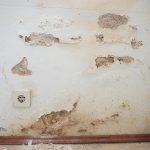
Damp Skirting Boards: What the Base of the Wall Reveals
September 7, 2026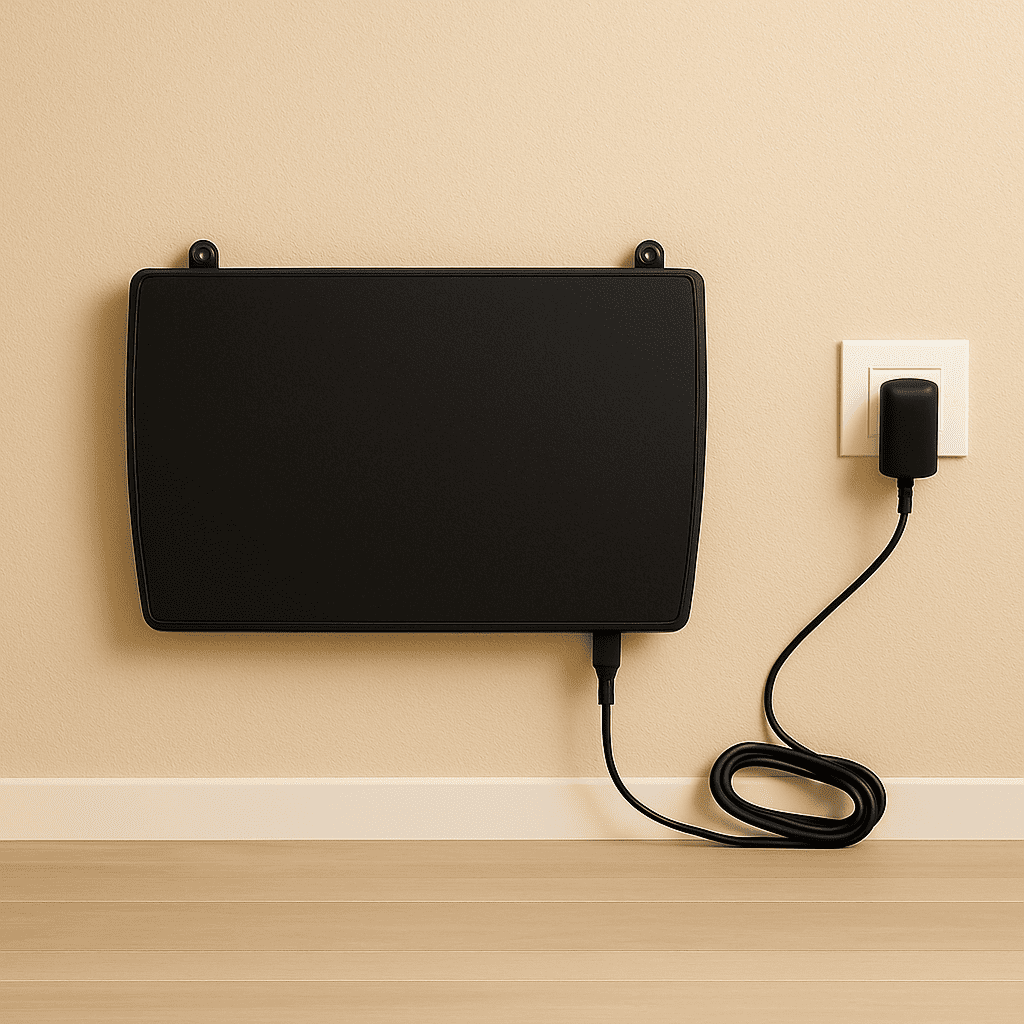
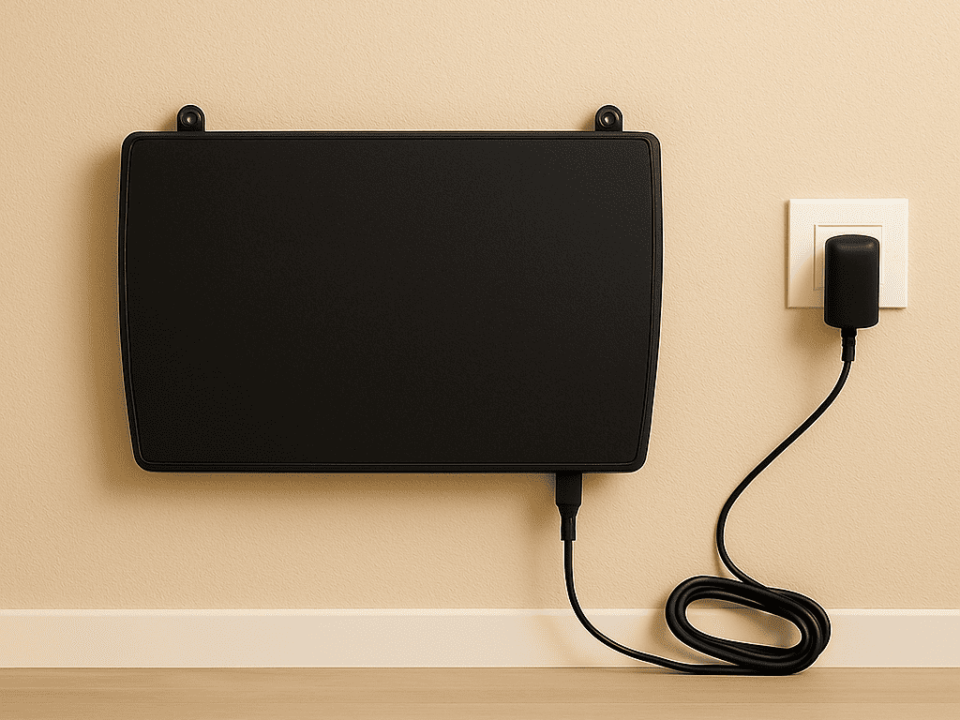
Electromagnetic damp treatment puzzles many owners, because it resembles no ordinary building job. No drilling, no cutting, no injected product. So here is how it acts on water, what it genuinely treats, how it is installed, and what to check before committing a budget.
What electromagnetic damp treatment acts on
The starting point: the polarity of water
Every water molecule carries two opposite charges. It therefore behaves like a tiny magnet. That very property helps it travel upward through the capillaries of the masonry.
The role of the signal
A unit emits low-frequency electromagnetic waves. These act on the polarity of the water molecules held inside porous materials.
The result inside the wall
The movement reverses. Water therefore travels back down towards the ground instead of climbing. Afterwards, the remaining moisture leaves the wall gradually through evaporation.
Electromagnetic damp treatment runs continuously, without noise or vibration. Moreover, no chemical enters the masonry.
What electromagnetic damp treatment covers
This distinction avoids a pointless purchase, so it comes before everything else.
It treats rising damp
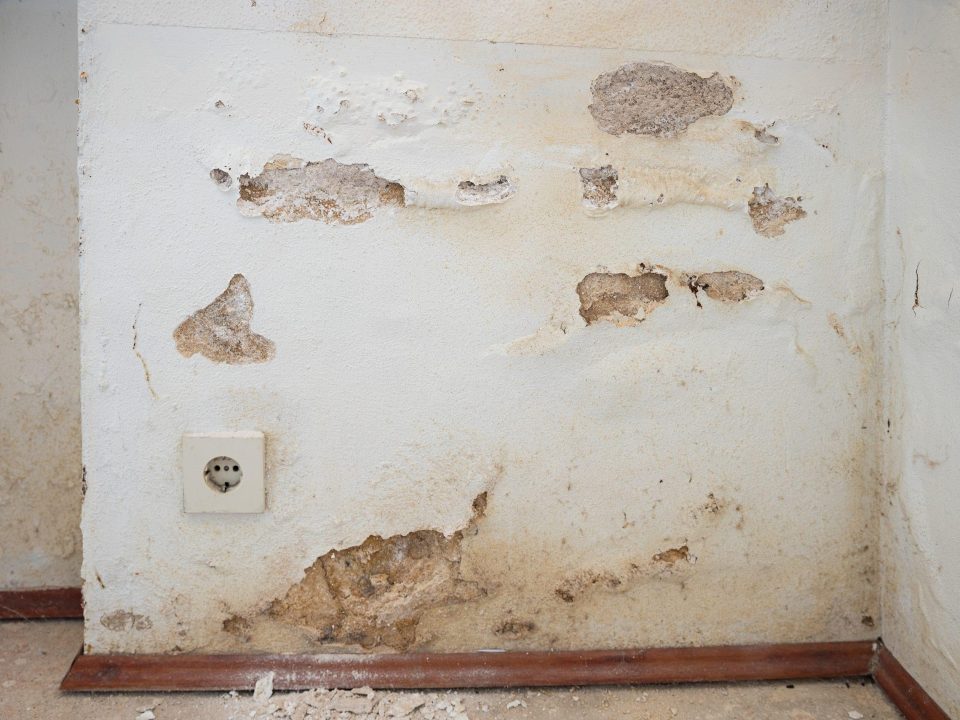
That is, water climbing from the ground for want of a damp proof course at the base. It forms a continuous band low down, at fairly even height, visible on both faces of the same wall. Furthermore, it changes slowly and leaves white deposits. Our page on rising damp and saltpetre sets out each sign.
It does not treat penetrating damp
An isolated patch appearing after rain belongs to weatherproofing: roof, windows, façade cracks or pipework. See our page on floods and water damage.
It does not treat condensation
Black mould in cold corners comes from indoor air, not from the masonry. See our page on wall condensation.
Nor does it treat flooding or surface mould. In other words, the scope stays narrow, and we say so plainly.
Electromagnetic damp treatment: how it is installed
On a load-bearing wall
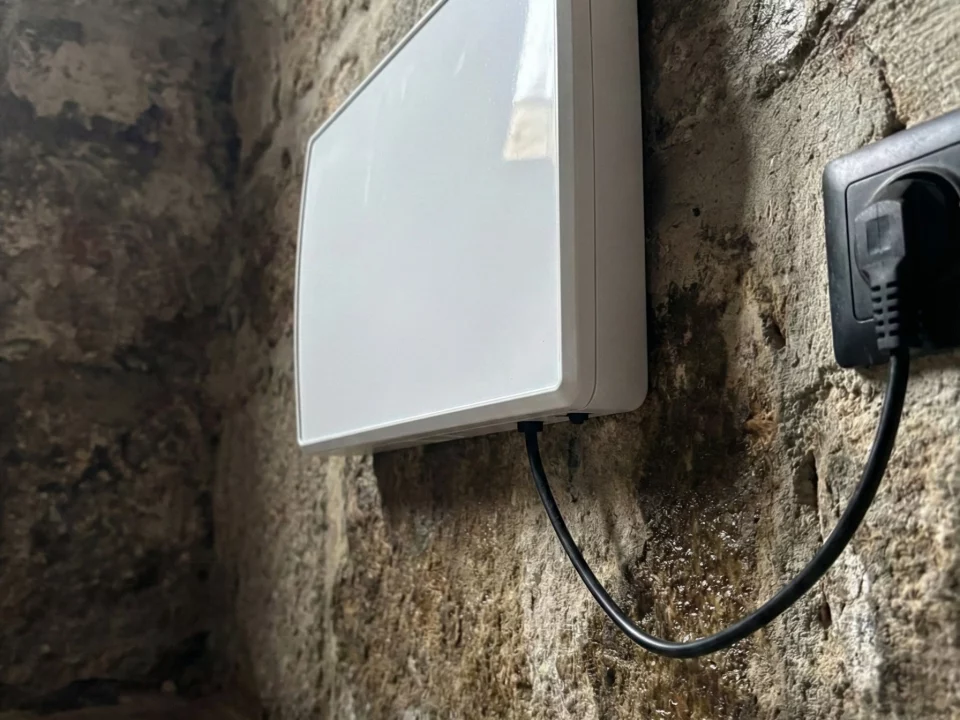
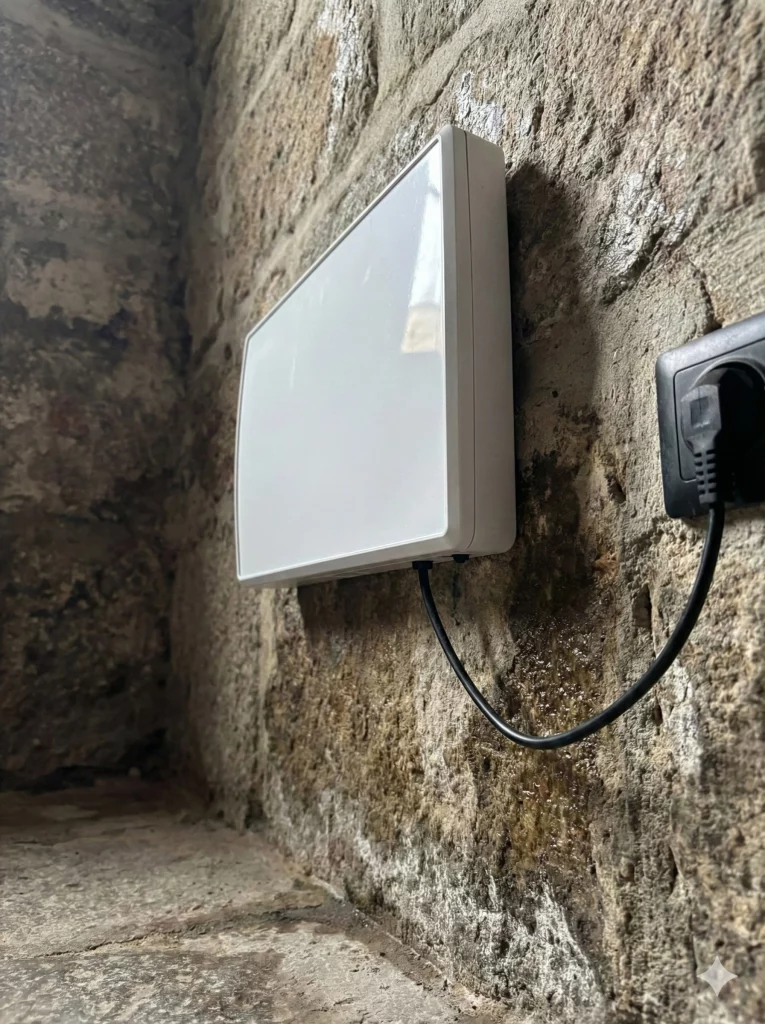
The unit sits on a damp load-bearing wall, never on a partition. Indeed, the phenomenon concerns elements that rest on the footings.
Low down
Fix it at floor level, within the affected zone. That is where water from the ground concentrates.
At the centre of the area
A central position uses the full radius of action. By contrast, a unit tucked into a corner loses half its reach beyond the building.
In direct contact with the masonry
This point gets overlooked most often. Dry lining, a stud partition or internal insulation move the unit away from the structure. As a result, they undermine the treatment. If the wall is lined, remove the lining at the installation point.
On an earthed socket
Connection requires an earthed socket available at all times. Avoid sockets controlled by a switch, since a daily interruption cancels the effect of a constant field.
Electromagnetic damp treatment: running cost and upkeep
Consumption reaches about 0.75 W, so roughly €15 of electricity a year. That is the main running cost, and it stays marginal.
No maintenance is required. There are no filters, no consumables and nothing to recharge. The unit works continuously, without intervention.
Finally, installation triggers no side works. No drilling, no chasing, no making good afterwards.
Choosing the range without error
This criterion matters most at the point of ordering.
Do not start from floor area. Measure instead the distance between the planned position and the furthest affected wall.
The ATE LC15 acts over 7.5 metres around it. The ATE LC30 covers 15 metres. The ATE Max reaches 30 metres and suits large buildings.
Watch out for long narrow buildings. The floor area looks modest, yet the distance between the two ends quickly exceeds the radius of a small model.
A geomagnetic version also exists, the ATG range, which runs with no supply. However, we only turn to it where fitting an ATE proves impossible.
What to check before buying
Before committing to electromagnetic damp treatment, bear in mind that this market stays very uneven. A few objective points nevertheless allow a serious comparison.
Laboratory testing
The EMITECH laboratory in Toulouse tests our units. Moreover, the ATE LC15, ATE LC30 and ATE Max models hold EMC and EMF certification.
Manufacturing
An engineering office in Toulouse designs the units. Then SYSELEC assembles and builds them. That electronics company has operated since 1980 in the Tarn region of France, and its factory holds ISO 9001 certification.
The warranty
ATE and ATG units carry a ten-year manufacturer’s warranty. The commitment therefore matches a treatment that unfolds over a long period.
Promises about timing
Treat claims of immediate results with care. Indeed, drying advances gradually, at a pace specific to each building.
Steps that speed up drying
A few light jobs change the timeline noticeably.
Strip sealed finishes low down: cement render, impermeable paint, bonded tiling. They stop water evaporating and push it higher.
Remove dry lining across treated areas, so air can move at the wall surface again.
Then fix outside water sources. A broken gutter, ground sloping towards the façade or a blocked gully feed the soil continuously.
Finally, keep decent ventilation. It supports evaporation, although it never replaces the treatment.
What results to expect, and when
A wall soaked with water does not empty at once. The timeline therefore forms part of the method.
When you follow our installation guidance, you generally see improvement between 18 and 24 months. The duration depends on the initial moisture level, on wall thickness, and on how freely the wall evaporates.
Other signs appear before that deadline. The mark stops gaining height, finishes hold again, and no further crystals form.
One phenomenon regularly misleads owners. Escaping water deposits the minerals it carried along the way. The wall may therefore whiten while it is actually recovering.
Frequently asked questions
Does electromagnetic damp treatment damage the masonry?
No. The unit fixes to the surface, with no drilling and no product. The work stays fully reversible.
Do I need one unit per room?
No. The unit covers a radius around its installation point, whatever the internal layout. The number therefore depends on the distance to cover.
Can I fit it myself?
Yes. Installation needs neither drilling nor building work. Follow the positioning instructions in the manual carefully.
Does the unit use much electricity?
No. About 0.75 W continuously, so roughly €15 a year, with no consumables and no servicing.
What if the source of the damp stays unclear?
Send us photographs of the affected walls. We then point you in the right direction, free of charge and with no site visit.
In short
Electromagnetic damp treatment acts on the polarity of water held in the masonry, so that it travels back down towards the ground. It drills nothing and introduces no product.
First confirm that the damp really rises from the ground, then measure the distance to cover, then choose the range. To compare models, visit the Humidistop shop, or write to us through the contact form.