Damp Protection for Internal Walls, in the Right Order
August 13, 2026
Rising Damp Treatment: What Works on a Solid Wall
August 13, 2026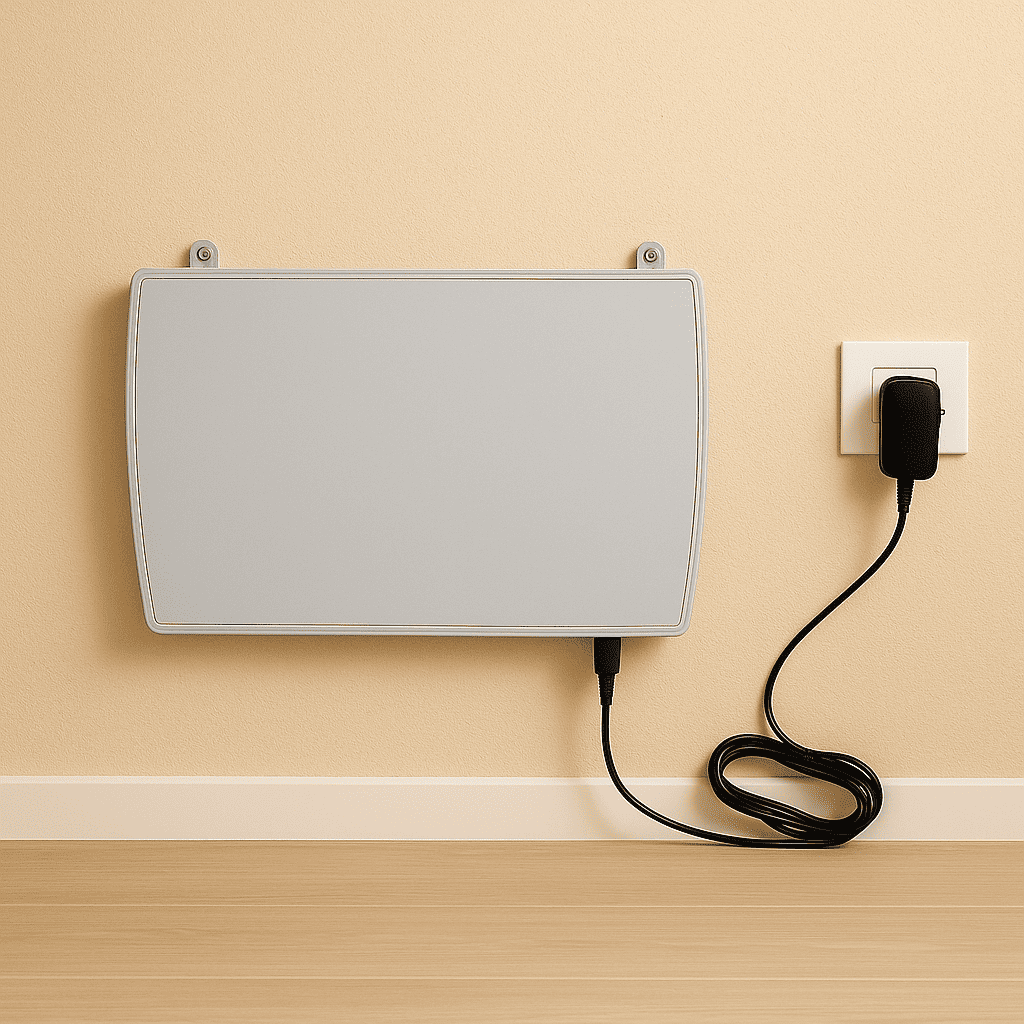
Dealing with damp in a bedroom starts with one question. Is the wall wet at the bottom, or is warm air giving up its water on a cold surface? So run a finger along the skirting board before you buy anything. So the answer changes every decision that follows.
A dark tide mark low down, with powdery plaster and flaking paint, points to water coming up from the ground. Beads of water on the window reveal point to condensation. So the first hour spent on damp in a bedroom goes on looking.
Three sources of damp in a bedroom
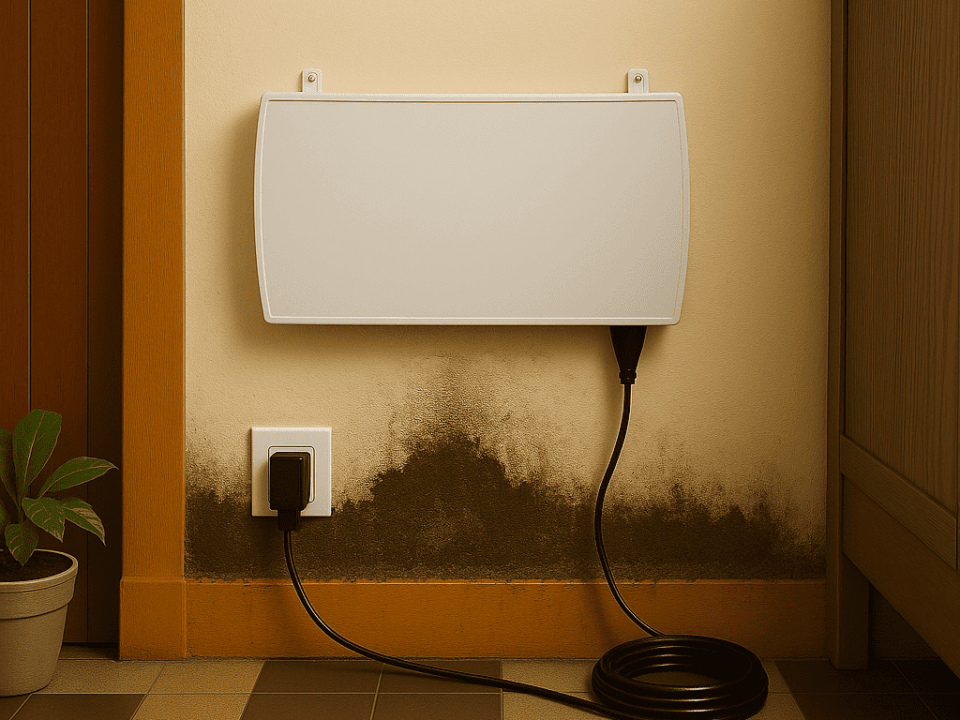
The first cause of damp in a bedroom shows at the base of the wall, roughly within a metre of the floor. Water from the ground climbs through the pores of the brick and the mortar. It behaves as water behaves in a paper towel, an effect known as capillary action. Our article ATE: electromagnetic anti-damp device for damp walls and rising damp follows that climb in detail.
The second cause shows on the coldest surfaces. Window reveals, the corner shared with an outside wall, the strip of plaster behind a wardrobe. Warm air meets a cold surface there and gives up its water.
The third cause of damp in a bedroom shows as a patch, often high up, that spreads after heavy rain. A blocked gutter or a cracked outside render usually explains it. Then Rising Damp: Signs, Causes and Solutions sets out how to tell the three apart.
Checks worth running tonight for damp in a bedroom
First, pull the bed and the wardrobe fifty centimetres clear of the outside wall. So air needs to move behind furniture. A still pocket against cold plaster is where trouble with damp in a bedroom usually begins.
Open the window wide for ten minutes, morning and evening, even in January. Short and wide beats a window left ajar, because the room loses far less heat.
Next, dry the laundry elsewhere, and put lids on pans in the kitchen next door. A rack of wet washing releases a great deal of water into the room.
Then go outside with a spirit level. If the path or the flower bed sits above the floor of the neighbouring room, the wall drinks from it.
A wall drying device for damp in a bedroom
Where the ground is the source of damp in a bedroom, only the masonry matters. Airing the room changes nothing there, and neither does a dehumidifier.
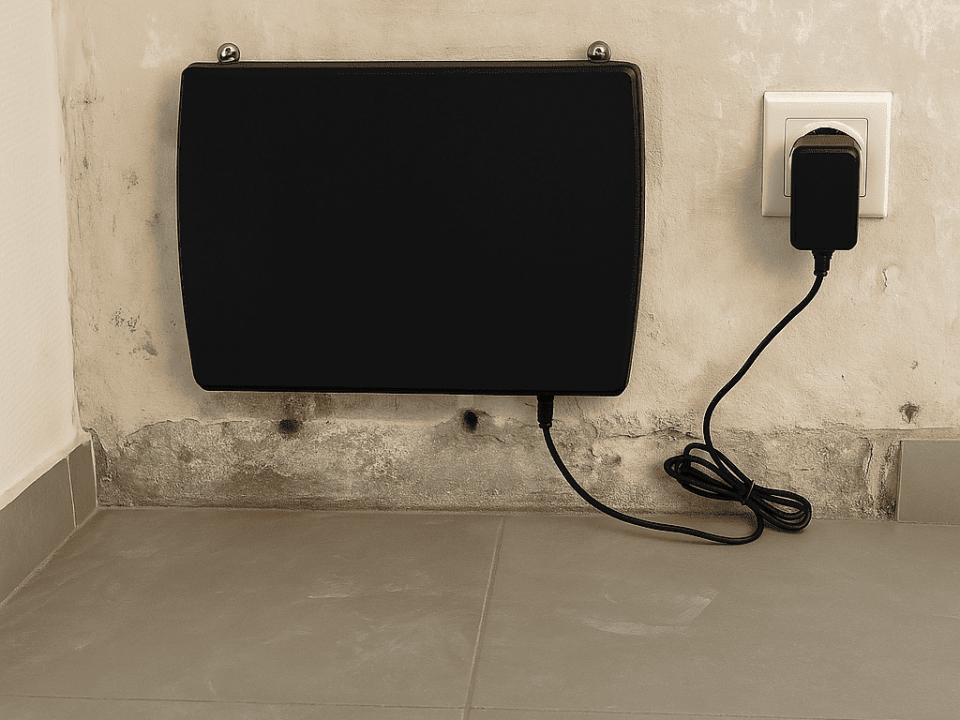
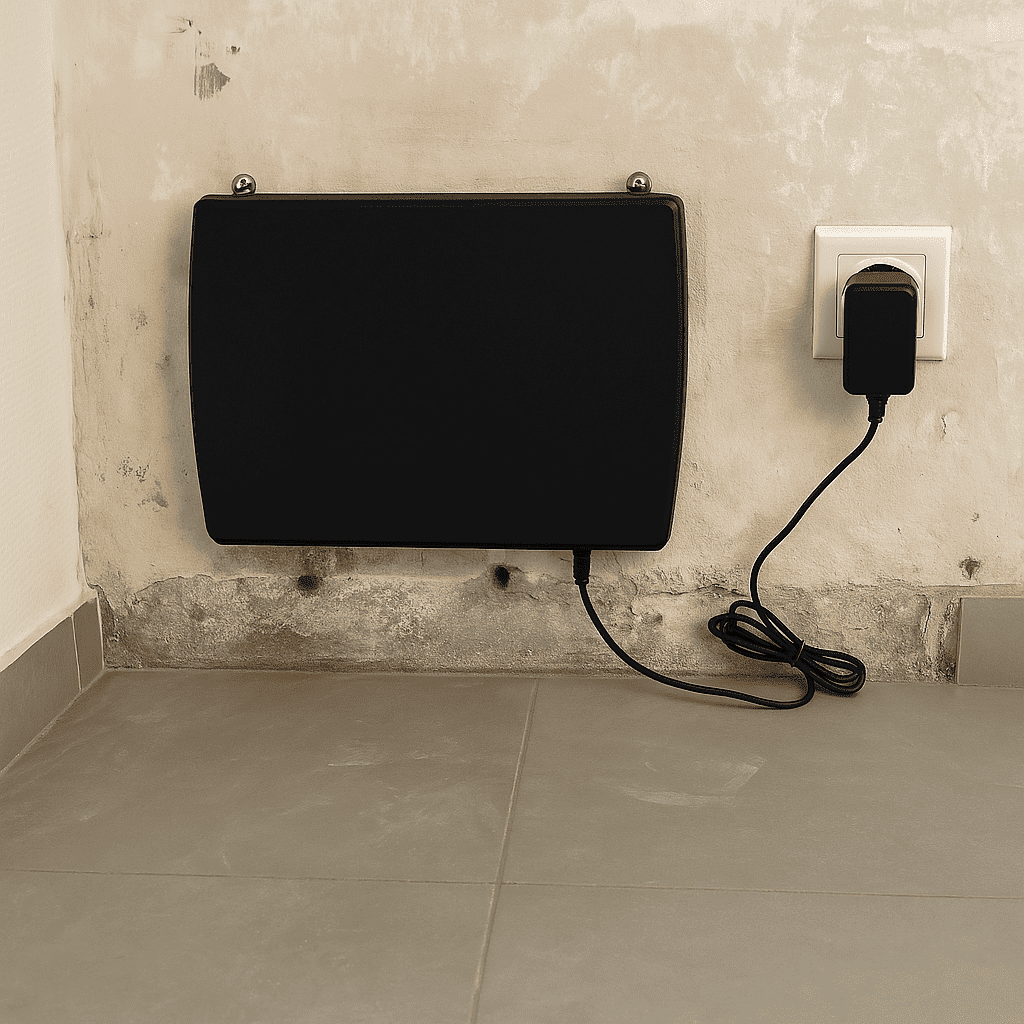
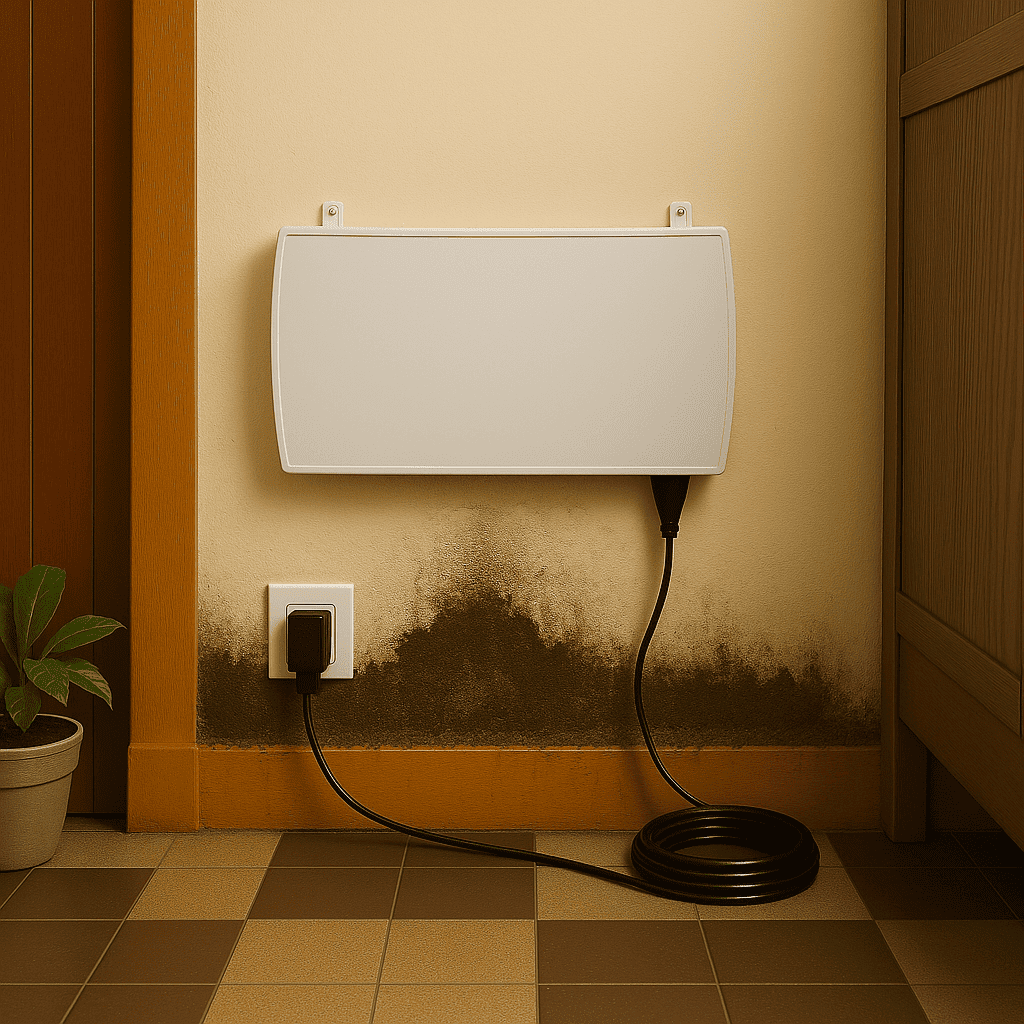
The ATE is an electromagnetic polarity inverter. Plugged into an ordinary socket, it sends very low frequency electrical pulses through the masonry, without a break. Its design principle comes from electro-osmosis. The pulses act on the electrical charges where the water meets the wall of the pore. So they work against the rise and favour the return of the water towards the footings.
That is the design principle, and we put it no higher. The unit takes nothing out of the wall and heats nothing. So the wall dries by ordinary evaporation, over 18 to 24 months. The ATG works on the same principle as a geomagnetic polarity inverter. Our guide Damp Wall Treatment: Which Solution Should You Choose? sets the two ranges side by side.
Choosing the model that covers your walls
Each unit works over a radius, measured from the point where you fix it. So measure the walls you want to treat, then pick the model whose radius covers them from a central position.
| Model | Range | Price |
|---|---|---|
| ATE LC15 | 7.5 m radius, 15 m across | €1,290 |
| ATE LC30 | 15 m radius, 30 m across | €1,590 |
| ATE MAX | 30 m radius, 60 m across | €1,990 |
Every unit draws 0.75 W on a 12 V supply and measures 322 x 232 x 32 mm. Each one carries a 10-year manufacturer warranty. All three are made in France, and delivery costs nothing. The ATG follows the same design principle with no mains supply, which suits a wall with no socket within reach.
Fitting the unit yourself
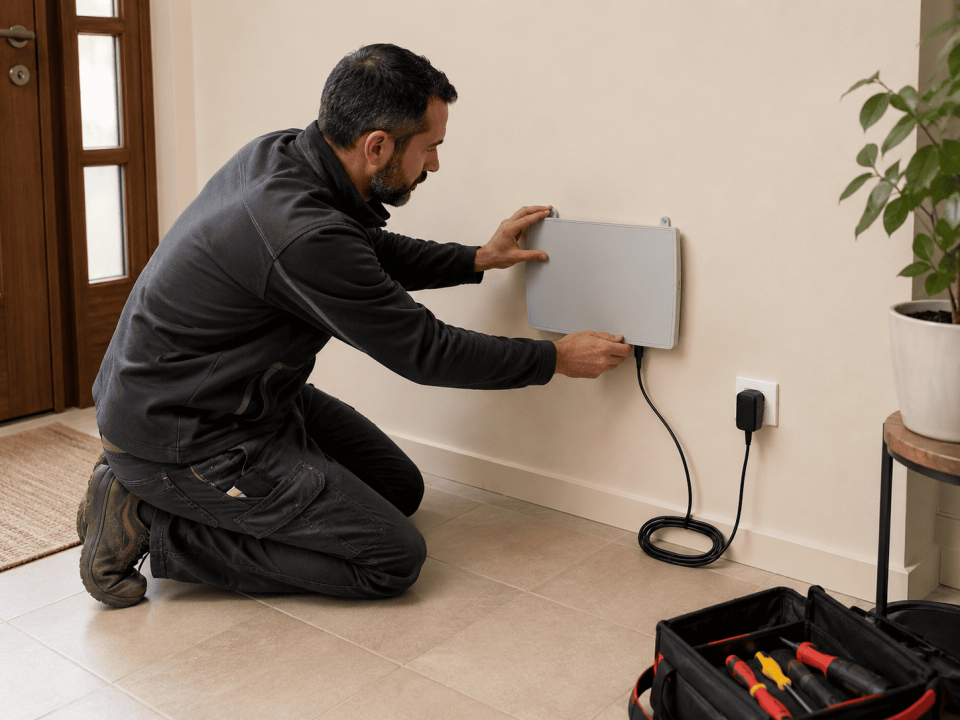
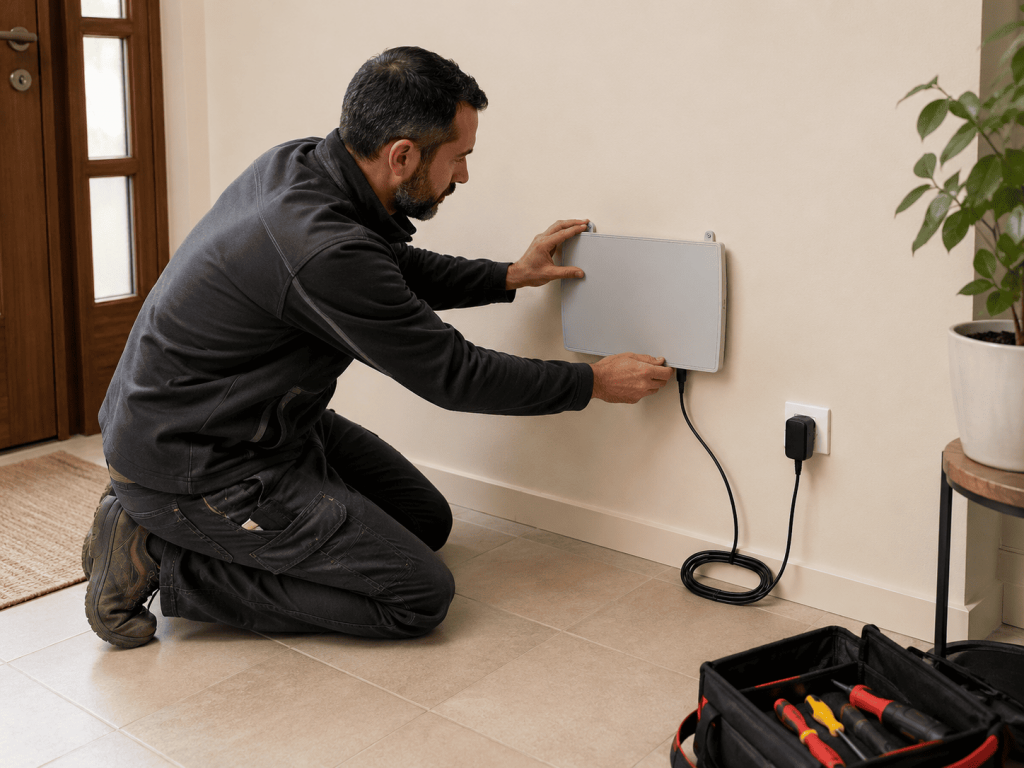
Fix it to a load-bearing wall or a partition wall, between 30 cm and 1 m above the floor. Aim for the centre of the area to treat. Two wall plugs and a socket, less than an hour, no tradesman.
Never fix it to plasterboard and never to insulation. The back of the unit has to touch the masonry. Keep 1.50 m between the unit and any other electrical equipment.
If the bottom of the wall carries a waterproof cement render, cut that render back over ten centimetres or so. Then the water reaches the air and evaporates, instead of sitting trapped behind a sealed skin.
Finishing the room once the wall has dried
Then wait before you decorate. A wall that still holds water pushes a fresh coat off within a season. So give it months of bare plaster and moving air first. Our guide ATG Geostop: the standalone unit that installs without an electrician covers the paints and renders that let a wall breathe.
Brush the white bloom off dry as it appears, with a stiff brush. It returns for a while, which is normal on a wall that has held salts. Our article ATE or ATG: which Humidistop device to choose against damp walls explains why.
A building site in the middle of the house puts most people off. So Resin injection cost: is there an alternative? describes the quieter route for damp in a bedroom. One unit on the wall, no trench, no drilling.
Frequently asked questions
Why is my bedroom wall damp at the bottom?
A damp band along the skirting board, with powdery plaster and salt, usually means rising damp. A leak from a pipe under the floor leaves a similar mark, so check the plumbing first.
Should I keep the bedroom window open in winter?
Open it wide for ten minutes twice a day rather than leaving it ajar. The room warms up again quickly and sheds the water it holds.
Is a dehumidifier enough for damp in a bedroom?
A dehumidifier dries the air, so it helps where condensation forms on cold surfaces. It does nothing about water climbing through the masonry, which is the harder half of damp in a bedroom.
Can I put furniture back against the wall afterwards?
Leave a gap of a few centimetres so air can move behind the wardrobe. A sealed pocket against an outside wall stays cold and collects water.
Which model suits a ground floor bedroom?
The ATE LC15 covers a 7.5 m radius, which takes in most bedrooms and the rooms next door. For a whole floor, the LC30 or the MAX reaches further.
Before you order
The unit treats rising damp and capillary damp, and nothing else. It does nothing for a leaking gutter, for driving rain, or for poor ventilation. Those three causes together remain more common than capillary damp, so rule them out first.
Rather than guess, send us two or three photos. One of the bottom of the wall, one of the room, one of the outside face. We read them and tell you which model fits, or tell you plainly that your problem lies elsewhere.
See the ATE and ATG models · free delivery, 10-year warranty, made in France